
Vacuum Packing Meat | Boost Shelf Life & Sales
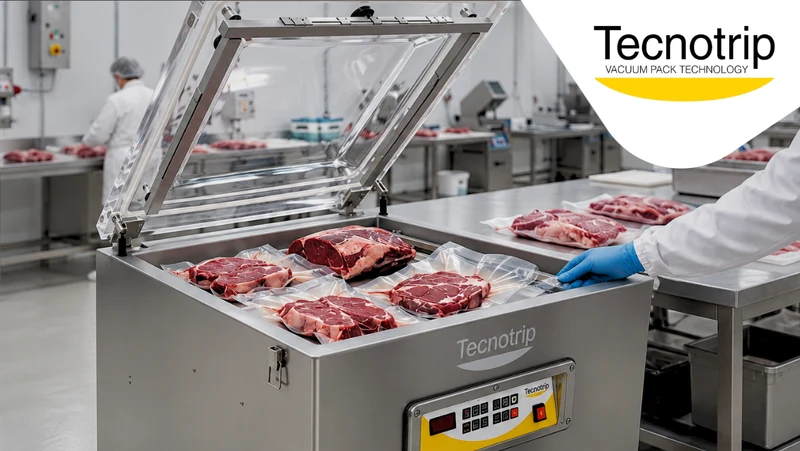
In the meat industry, every gram counts and every extra day of shelf life turns into margin. And yet, many processing workshops, cutting rooms and butcher’s shops keep losing product to poor preservation: meat that oxidises too soon, weight loss through dehydration, and returns that nobody tracks but that quietly eat into the profit.
Vacuum packing meat is the most proven technique to stop those losses. By removing the air from the pack, oxidation slows down, the growth of aerobic microorganisms is held back, and colour, texture and weight are better preserved. The takeaway for management is simple: more selling days, less wasted product, and a presentation the customer sees as more professional.
In this guide you’ll see why meat loses value when it isn’t packed properly, what to realistically expect from vacuum, and how to choose a reliable machine that can keep up with a busy workshop. If you’d rather jump straight in, you can see the full range on our vacuum sealers page.
Why meat loses value when it isn’t packed properly
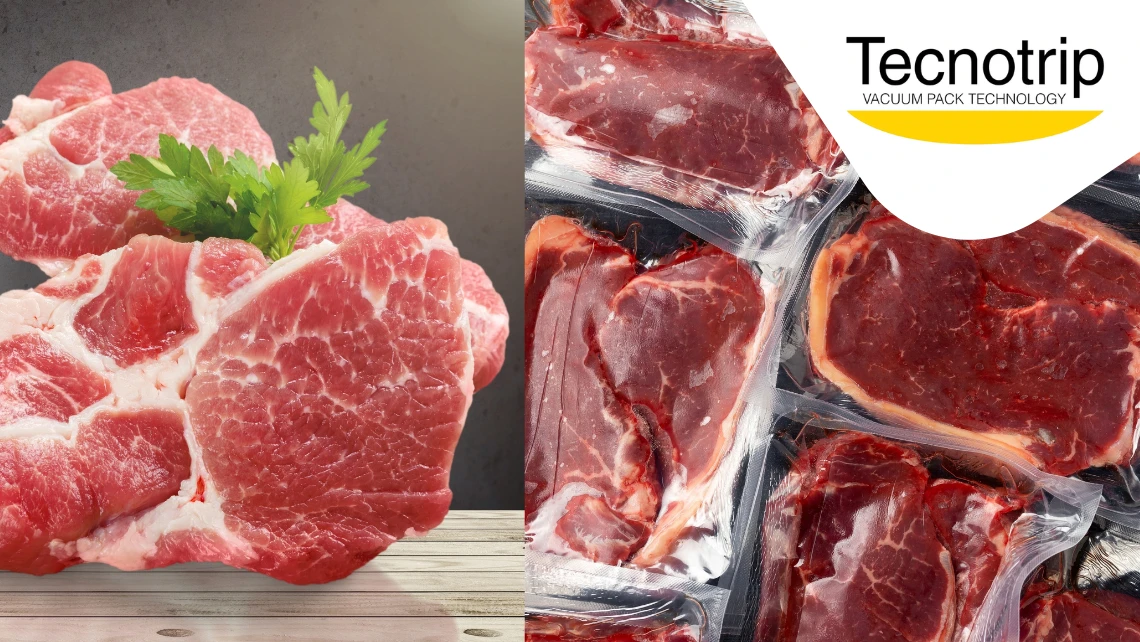
Air is the enemy. In contact with oxygen, the fat and myoglobin in meat oxidise: the colour turns brown, off-odours appear, and the perception of freshness drops on the shelf. On top of that comes weight loss through dehydration (product you’ve paid for that literally evaporates) and the growth of aerobic flora, which shortens shelf life.
In a cutting room or workshop, that deterioration turns into three very concrete costs:
- Product withdrawn before it’s sold, especially after the weekend.
- Returns and complaints from distributors and customers over appearance or expiry.
- Invisible margin loss: weight loss never shows up on an invoice, but it’s there every single day.
Most businesses accept these losses as inevitable. They are not.
What you actually gain with vacuum packing
Vacuum packing isn’t magic, it’s control. By removing the air from the pack:
- Refrigerated shelf life is extended. Depending on the product and storage temperature, vacuum can roughly multiply shelf life by 3 to 5 times compared with unpacked meat, always maintaining the cold chain. (Indicative industry range; the exact figure depends on the cut, the temperature and the process)
- Weight loss is reduced, because the product is isolated from the environment.
- Colour and texture are better preserved, improving presentation at the point of sale.
- Logistics get easier: airtight, stackable and more hygienic packs for transport.
- Traceability improves: each pack can be consistently labelled with batch and date.
It’s important to be honest about what vacuum does not do: it doesn’t replace the cold chain or good hygiene practices. Vacuum packing creates a low-oxygen environment, which is exactly why keeping refrigeration and controlling temperature is essential, as food safety authorities point out. Done well, it’s a very safe technique; done halfway, it gives a false sense of security.
Indicative shelf life of vacuum-packed meat
These ranges are indicative and are meant to size the benefit, not as a guarantee. Real shelf life is determined by each company through its own analysis and HACCP plan.
| Product | Unpacked (chilled) | Vacuum (chilled) |
|---|---|---|
| Fresh red meat (cuts) | 3-4 days | 10-21 indicative days |
| Minced meat | 1-2 days | Notably longer with vacuum and stable cold |
| Processed & cured | Variable | Extended, with better presentation |
The exact figure depends on the cut, the initial microbial load, the temperature and the packaging material. Always refer to your HACCP plan.
The Tecnotrip solution for the meat sector
This is where the choice of machine makes the difference between a solution that lasts for years and one that starts causing trouble by the second summer. Tecnotrip manufactures vacuum sealers built for the intensive use of the food industry, with a very different approach from generic equipment.
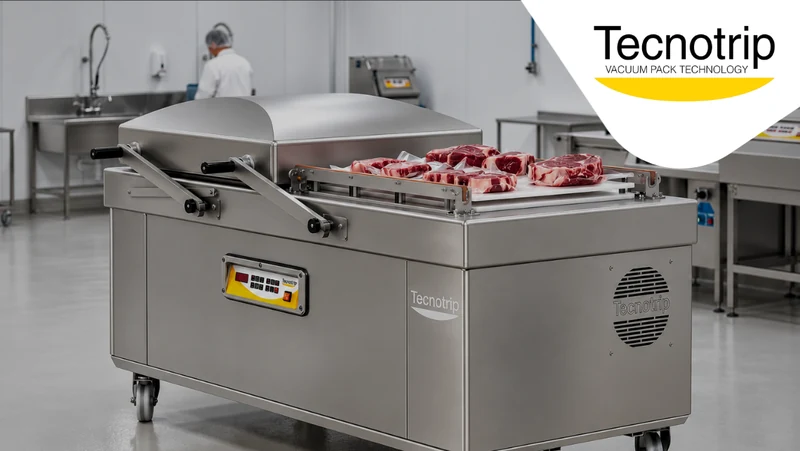
Compared with generic or imported solutions, the Tecnotrip proposition rests on four pillars:
- Robust build and longevity. Machines built to work every day for years, not to last until the warranty ends. Mechanical and electrical reliability is the core of the brand.
- After-sales service and spare parts direct from the factory. When a machine stops, the problem isn’t the machine: it’s the day you can’t pack. Direct spare-part supply and easy maintenance reduce that risk.
- A range matched to real volume. From tabletop sealers for workshops to automatic double-chamber machines for higher-output lines, the machine is chosen by volume, not the other way round. See the detail on the meat range product sheet. And for the final finish, we complete the line with shrink tunnels and dryers that fit the bag tightly to the product.
- Product knowledge. We don’t sell a box: we help you choose the machine, the cycle and the consumable according to the type of meat and the pack format.
As for specific performance: cycles per hour, vacuum level and chamber dimensions per model, we state these per model on the corresponding technical sheet.
How to choose the right vacuum sealer for meat
Before deciding, it’s worth having five questions clear:
- What volume do you pack per day and at peak times? This sets the jump between tabletop, single chamber and double chamber.
- What pack format do you use? Bag (flat or shrink), heat-sealed tray or skin change the machine and the consumable.
- Do you need gas injection (modified atmosphere)? For certain products it extends presentation even further.
- What does your technical service look like? The proximity of service and spare parts matters as much as the spec sheet.
- What space and installation do you have? Power, sockets and space determine the model.
Answer these five, and the conversation with the manufacturer stops being about price and starts being about the solution.
Vacuum, shrink, modified atmosphere or skin: which technique fits
Not all packing is the same, and choosing the technique to match the product makes a difference in presentation and preservation.
- Standard vacuum (flat bag): the most versatile and affordable option. It removes the air and seals the bag. Ideal for cuts, processed products and freezing.
- Vacuum + shrink (shrink bag): after vacuuming, the bag passes for a few seconds through a hot-water tunnel that shrinks it and fits it to the product like a glove; a dryer then removes the water. No folds or loose “ears”, better shelf presentation and less room for purge to collect. Very common for bone-in pieces, whole cuts and cured products.
- Modified atmosphere (MAP): replaces the air with a food-grade gas mix.
- Skin: the film clings to the product like a second skin, with a premium presentation that shelves reward. Designed for high-value cuts.
The machine and the consumable change with the technique, and not every sealer does all of them. So it’s worth deciding first how you want to present the product and then choosing the equipment, not the other way round.
Common mistakes when vacuum packing meat
Avoiding these mistakes saves more money than any promotion:
- Packing warm or hot product. It creates condensation and shortens shelf life. Meat should go in cold.
- Breaking the cold chain. Vacuum doesn’t make up for poor refrigeration; storage temperature rules.
- Using the wrong bags. The packaging material must be food-contact approved and suited to the product (barrier, bone resistance, freezing). Food-contact materials are regulated at European level.
- Neglecting prior hygiene. Vacuum holds back aerobic flora, but it won’t fix contamination that was already there.
- Sizing the machine wrong. A sealer that can’t keep up forces rushed packing and skipped steps. Choosing the right equipment is part of packing quality.
None of these points costs money to fix; all of them cost money if ignored.
Summary
Vacuum packing meat is the most direct lever to extend shelf life, cut losses and improve presentation in the meat industry. It doesn’t replace cold or hygiene, but applied well it turns invisible losses into margin. The key is choosing a reliable machine, with good after-sales service, sized to your real volume and validating every figure with data, not promises.
Frequently asked questions
How long does vacuum-packed meat last in the fridge?
As a guide, vacuum can multiply shelf life by 3-5 times compared with unpacked meat, keeping the cold chain. The exact figure depends on the cut, the temperature and your HACCP plan.
Does vacuum packing kill bacteria?
No. It reduces oxygen and holds back aerobic flora, but it doesn’t sterilise. That’s why keeping refrigeration and good hygiene practices is essential.
Which sealer do I need for a cutting room?
It depends on volume and pack format. For high output, an automatic double-chamber machine is recommended; for workshops, a tabletop or floor unit (both chamber machines). The best approach is to size it with technical advice.
What does shrinking add to vacuum-packed meat?
Finish and presentation. Preservation comes from vacuum and cold; shrinking tightens the bag around the piece, removes folds and leaves less room for purge. It is the natural next step when the product goes to retail shelves or a demanding customer.
Shall we talk about your case?
Every workshop and every cutting room is different. If you want to know which sealer fits your volume, your product and your budget, get in touch and we’ll advise you with no obligation. Tell us what you pack and we’ll help you get the choice right first time. → Contact form / Request advice
Authority source: UK Food Standards Agency — vacuum packing guidance.
Article signed by: Gemma Ferrer, CEO of Tecnotrip.
Related articles
Fecha: 01/10/2026
Categorías: News
Explore more articles on our blog
Discover more from the TECNOTRIP Blog and keep up with our latest news and technical insights.
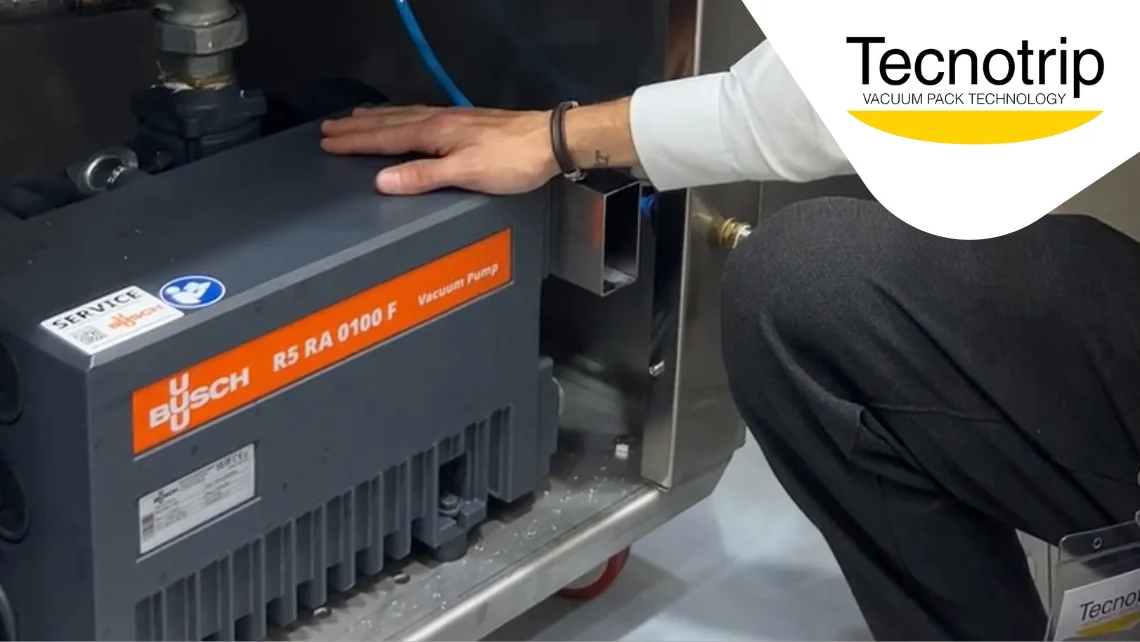
Discover how to carry out preventive maintenance on your vacuum packaging machine and prevent breakdowns. Learn when to check the Teflon tape, change the pump oil, inspect the seals and clean the chamber. Includes a practical checklist and advice from Tecnotrip’s technical service team.
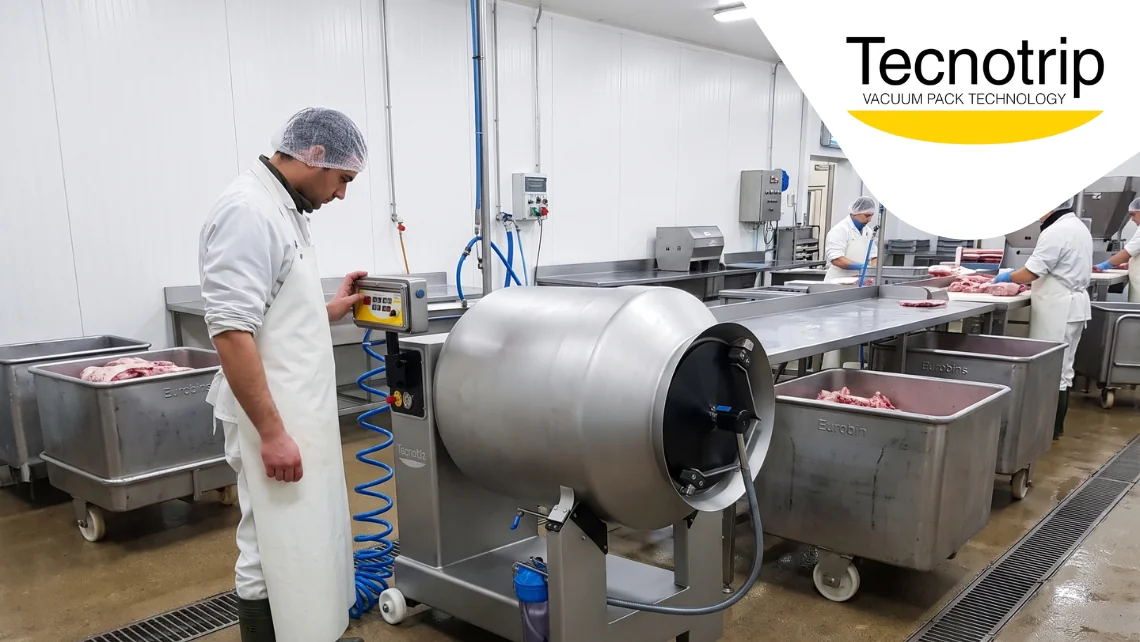
What is the difference between salt curing, tumbling and mixing? Discover how Tecnotrip's SAP vacuum tumblers and Vakona mixers work, their applications in the food industry, and how to choose the right machine for each process.
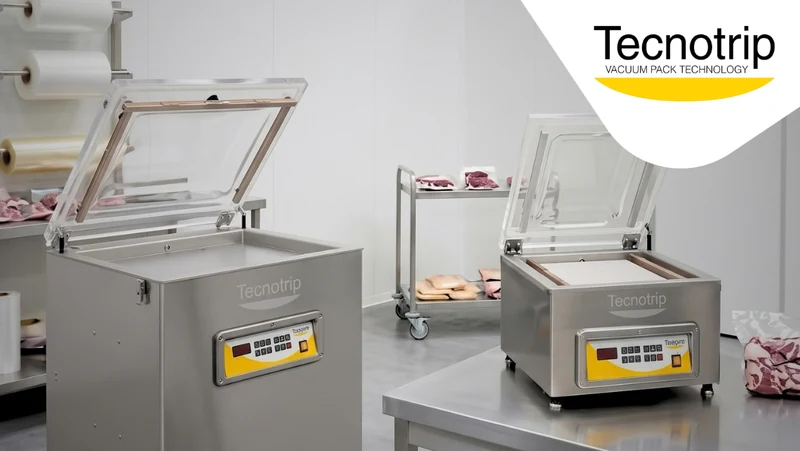
When a workshop or food business considers vacuum packing, the same doubt almost always comes up: chamber or tabletop? tabletop or floor-standing? And behind that doubt there's usually a misunderstanding that costs money.

Discover which packaging technology to apply to 4th and 5th Range —MAP, vacuum, Skin and processing— to extend shelf life, eliminate waste and optimize your line.

Discover the preventive maintenance plan for your vacuum packaging machine: prevent breakdowns, reduce costs and extend machinery life with Tecnotrip's technical service.

Discover how vacuum, MAP and Skin packaging improve the preservation of fresh and cured meat, reduce waste, and optimize your meat facility's efficiency.


