
Vacuum Packaging Machine Maintenance | Guide and Checklist
A vacuum packaging machine rarely breaks down without warning. There are usually signs first.
First, it takes a little longer to create a vacuum. Then, a bag fails to seal properly. Later, a seal opens in cold storage. And the day the machine finally stops is usually the busiest one.
Most of these breakdowns can be prevented with simple preventive maintenance: regularly checking a few key components and replacing parts before they fail.
Drawing on the experience of our technical service team, this guide explains which parts need the most attention, how often to check them and which warning signs to look out for. If you would rather leave it to a professional, take a look at our technical service.
Why preventive maintenance costs less
Maintenance is often seen as an expense. With a vacuum packaging machine, it actually saves money.
Think about the cost of downtime:
- Products that cannot be packaged on time and lose shelf life.
- Poorly sealed bags that open days later, in cold storage or at the customer’s premises.
- Repackaging: another bag and more labour.
- Emergency repairs: a rushed repair always costs more than a scheduled inspection.
Replacing Teflon tape or changing the oil costs little. Losing an entire morning of packaging costs much more.
The two components that need the most maintenance
If you remember just two things from this guide, make them these. They are the two areas our technical service team emphasises most.
1. Teflon tape on the sealing bar
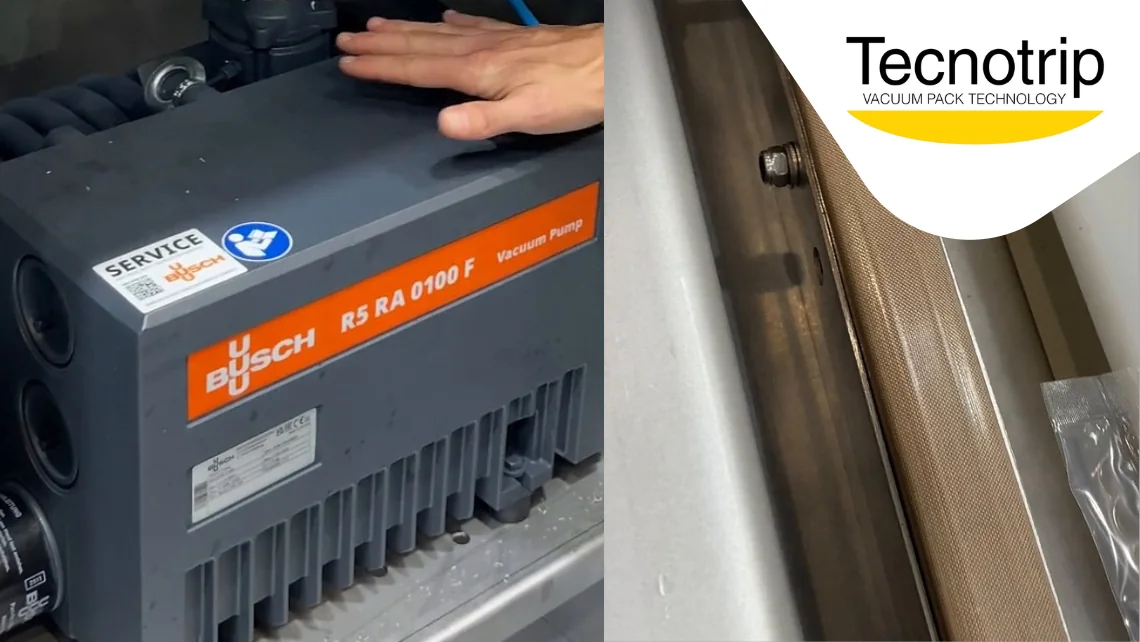
The sealing bar closes the bag. A layer of Teflon tape covers the heating element to prevent the plastic from sticking and distribute heat evenly.
Over time, the Teflon tape loses its properties: it burns, wears out or cracks. When that happens, heat is no longer transferred properly and the seal fails.
Signs that it needs replacing:
- The Teflon tape looks dark, burnt, wrinkled or cracked.
- The bag plastic sticks to the bar.
- Seals are uneven, wrinkled or have unsealed sections.
How often: periodically, depending on use. For machines in daily operation, check it every week and replace it at the first sign of wear.
2. The vacuum pump and its oil
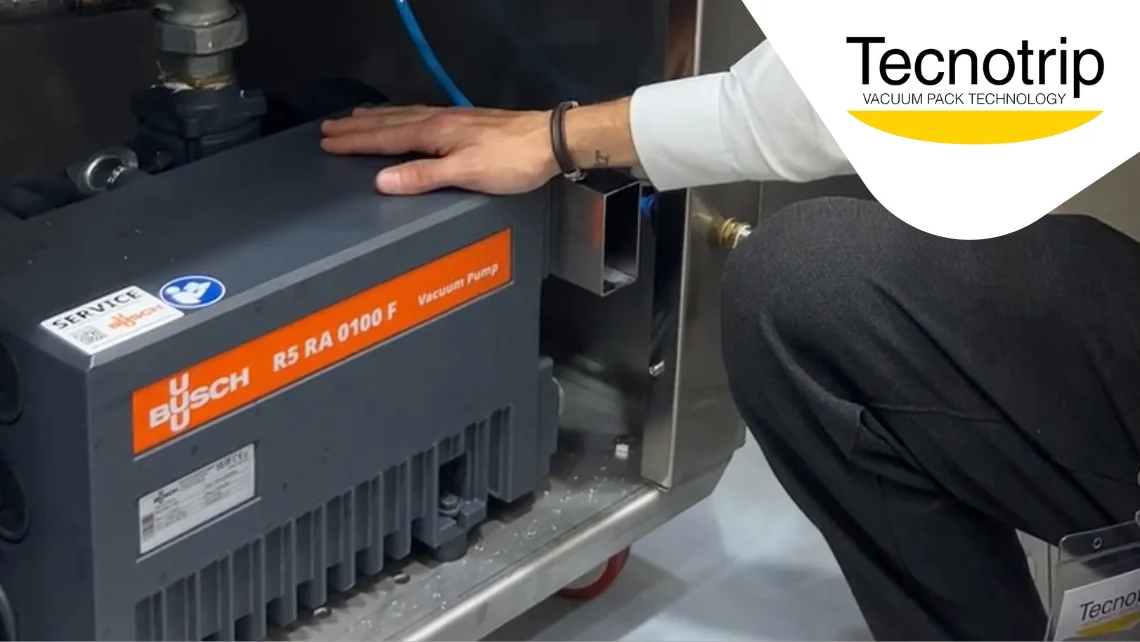
The pump is the heart of the machine. It removes air from the chamber and determines how quickly and effectively the required vacuum level is reached.
In oil-lubricated pumps, the oil is essential: it lubricates, seals and cools. Over time, moisture and particles from the product contaminate it, reducing its effectiveness.
The oil must be changed at least once a year. However, it often needs changing more frequently, depending on the type of product and the condition of the oil. Products with high moisture or liquid content cause the oil to deteriorate faster.
Warning signs:
- The oil in the sight glass looks cloudy, milky or dark.
- The level is below the mark.
- The machine takes longer to create a vacuum or does not reach its usual vacuum level.
- Smoke or oil mist comes out of the exhaust.
Oil-lubricated pumps also have an exhaust filter that traps oil mist and also needs replacing periodically.
[Insert video here]
Other components to check
3. The lid gasket
The rubber gasket between the lid and the chamber ensures an airtight seal. If it is compressed, cut or dried out, air leaks in and the machine cannot achieve a good vacuum, even if the pump is in perfect condition.
Inspect it visually and clean it regularly. Replace it if you notice cracks, deformation or sections that no longer make proper contact.
4. The sealing bar’s silicone pressure strip
Opposite the sealing bar, on the lid, there is a silicone pressure strip that presses against the bag during sealing. If it is marked or deformed, pressure is uneven and the seal becomes irregular. Replace it when grooves appear or it loses its elasticity.
5. Cleaning the chamber
Residues of grease, liquid or product inside the chamber can reach the pump and contaminate the sealing area. Clean the chamber and sealing bar at the end of each working day, with the machine disconnected and using cleaning products suitable for food-contact surfaces.
It is also a matter of hygiene: European regulations require equipment that comes into contact with food to be kept clean and in good condition.
6. The vacuum gauge and programme
Occasionally checking the vacuum level reached by the machine using the same programme is the easiest way to detect a gasket or pump that is starting to fail. If it takes progressively longer to reach the same level, something is wearing out.
Maintenance checklist
| Frequency | What to check | What to do |
|---|---|---|
| Daily | Chamber, sealing bar and gasket | Remove product, grease and liquid residues |
| Weekly | Sealing bar Teflon tape | Inspect its condition; replace at the first sign of wear |
| Weekly | Oil level and colour (sight glass) | Top up if low; change sooner if cloudy |
| Monthly | Lid gasket and silicone pressure strip | Check for cracks and deformation |
| Monthly | Vacuum cycle time | Check that it reaches the same vacuum level in the same time |
| At least once a year | Pump oil | Change the oil (more often depending on the product and its condition) |
| Annually | Full inspection by the technical service team | Pump, exhaust filter, heating elements, gaskets and electrical components |
Suggested intervals only. Actual use (hours per day, type of product) may require more frequent checks.
Symptoms, likely causes and solutions
| Symptom | Most likely cause | What to do |
|---|---|---|
| The bag does not seal or the seal is uneven | Worn Teflon tape or damaged silicone pressure strip | Replace the Teflon tape and/or pressure strip |
| Plastic sticks to the bar | Burnt Teflon tape | Replace the Teflon tape |
| It takes longer to create a vacuum | Degraded oil, clogged filter or damaged lid gasket | Check the oil and gasket; contact technical service |
| The usual vacuum level is not reached | Lid gasket, pump oil or pump wear | Check the gasket and oil; have the pump inspected |
| Oil mist from the exhaust | Clogged exhaust filter | Replace the filter |
Spare parts: genuine and readily available
Good maintenance depends on having spare parts available when needed. Teflon tape, gaskets, silicone strips, oil and filters are consumables: ideally, you should always keep a set on hand.
At Tecnotrip, we design and manufacture our own vacuum packaging machines, so we know every component and supply genuine spare parts directly from the factory, with fast shipping. This gets your machine back up and running as soon as possible with parts that fit properly the first time.
When to call technical service
Operators can handle some tasks themselves: cleaning, checking the Teflon tape and monitoring the oil level. Other tasks are best left to technical service:
- Oil and filter changes if you are not experienced with the pump.
- Any electrical or heating element fault.
- Vacuum loss that cannot be explained by the gasket or oil.
- The full annual inspection, which identifies wear before it causes a breakdown.
Our technical service team and our network of distributors with their own technical support carry out these inspections with the expertise of the machine manufacturer.
Summary
Maintaining a vacuum packaging machine is straightforward when done regularly. The two key components are the sealing bar Teflon tape, which must be replaced periodically to ensure proper bag sealing, and the vacuum pump oil, which must be changed at least once a year, or sooner depending on the product and the oil’s condition. By also looking after the lid gasket, cleaning the machine daily and scheduling an annual technical inspection, you can keep it running reliably for years.
Frequently asked questions
How often should vacuum pump oil be changed?
At least once a year. If you package products with high moisture or liquid content, or if the oil looks cloudy or dark, it should be changed sooner.
Why is my vacuum packaging machine not sealing bags properly?
The most common causes are worn Teflon tape on the sealing bar or a damaged silicone pressure strip. The bag’s sealing area also needs to be clean and dry.
Why is my vacuum packaging machine taking longer to create a vacuum?
This is usually caused by degraded pump oil or a lid gasket that no longer seals properly. If checking both does not solve the problem, have the pump inspected by technical service.
Shall we schedule your maintenance inspection?
Tell us which model you have and how many years it has been in operation, and we will recommend a maintenance inspection and the spare parts worth keeping on hand. No obligation. → Contact form / Request an inspection
Reference: Regulation (EC) No 852/2004 on the hygiene of foodstuffs.
Article by: Carlos Bellido, Operations Director.
Fecha: 01/11/2026
Categorías: News

Explore more articles on our blog
Discover more from the TECNOTRIP Blog and keep up with our latest news and technical insights.
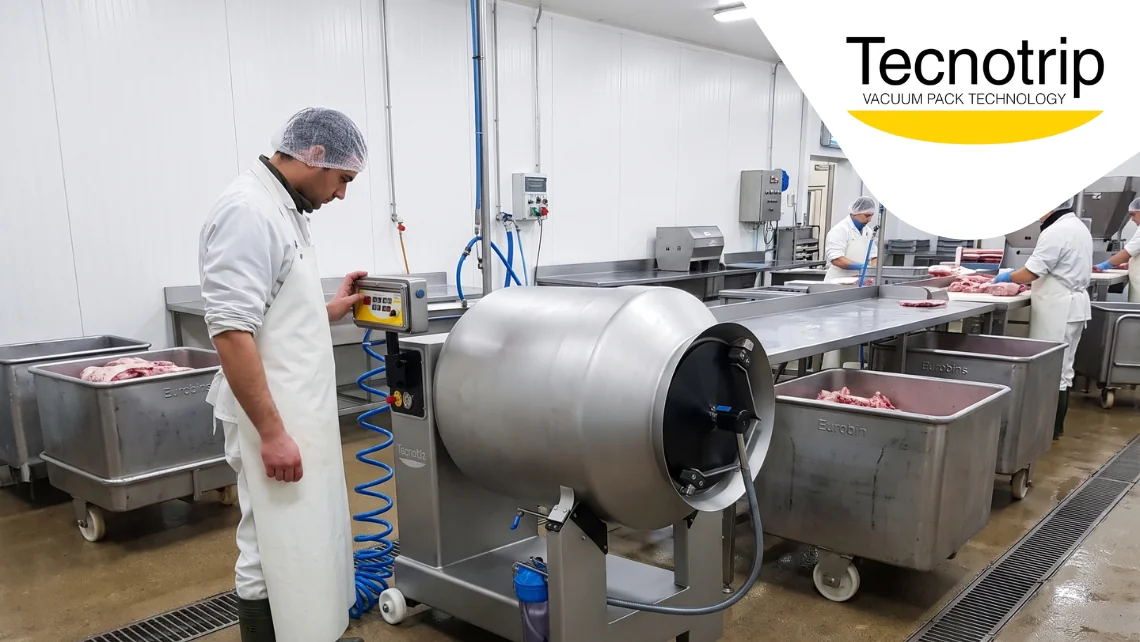
What is the difference between salt curing, tumbling and mixing? Discover how Tecnotrip's SAP vacuum tumblers and Vakona mixers work, their applications in the food industry, and how to choose the right machine for each process.
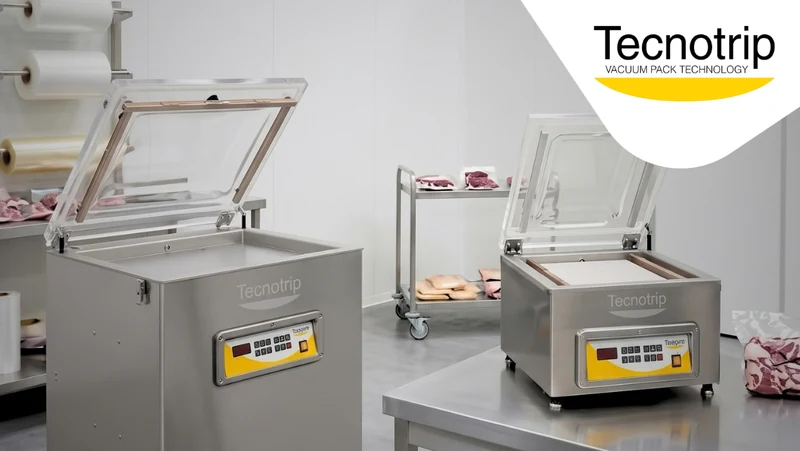
When a workshop or food business considers vacuum packing, the same doubt almost always comes up: chamber or tabletop? tabletop or floor-standing? And behind that doubt there's usually a misunderstanding that costs money.

In the meat industry, every gram counts and every extra day of shelf life turns into margin. And yet, many processing workshops, cutting rooms and butcher's shops keep losing product to poor preservation: meat that oxidises too soon, weight loss through dehydration, and returns that nobody tracks but that quietly eat into the profit.

Discover which packaging technology to apply to 4th and 5th Range —MAP, vacuum, Skin and processing— to extend shelf life, eliminate waste and optimize your line.

Discover the preventive maintenance plan for your vacuum packaging machine: prevent breakdowns, reduce costs and extend machinery life with Tecnotrip's technical service.

Discover how vacuum, MAP and Skin packaging improve the preservation of fresh and cured meat, reduce waste, and optimize your meat facility's efficiency.


