

MEAT SECTOR: Packaging & efficiency. DISCOVER IT!
Technological evolution in meat sector packaging
The meat sector faces a dual challenge: maintaining the maximum organoleptic freshness of fresh meat while optimizing the curing and visual presentation of sliced products or noble cuts. In a highly competitive market, reducing weight loss due to oxidation or drip loss is essential to protect profit margins.
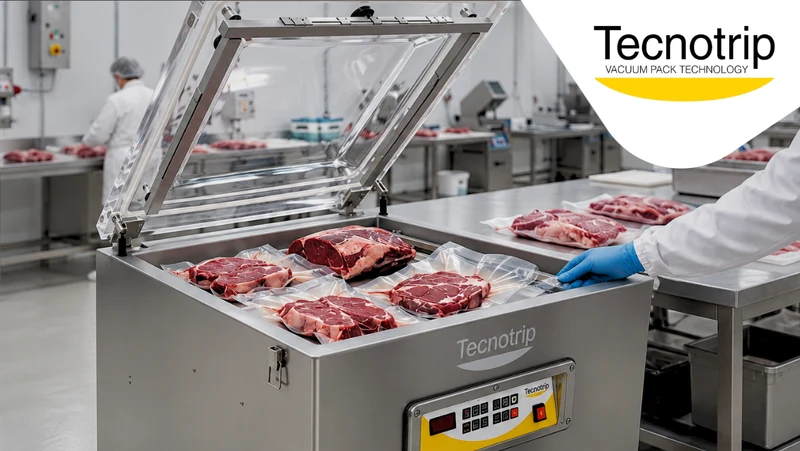
Integrating advanced industrial vacuum packaging machines for the meat sector extends product shelf life from days to weeks, preserving the bright red color of myoglobin for direct retail and distribution channels.
In this article, we analyze key preservation technologies for fresh meat, cured meats, and prepared meat products.
Main challenges in fresh and cured meat preservation
Meat deterioration occurs primarily due to microbial growth and the oxidation of fats and proteins.
Critical factors in meat processing facilities:
- Weight loss through evaporation: unpackaged exposed meat constantly loses moisture, reducing its saleable weight.
- Oxidation and rancidity: direct contact with oxygen alters fat flavor and darkens meat color.
- Bone punctures: cuts such as T-bone steaks, ribs, or pork shoulders require high mechanical resistance materials to prevent vacuum loss.
Traditional vacuum, MAP, and Skin: which one for your facility?
Not all meat solutions require the same packaging system. The right choice depends on the sales format and product type:
- Direct vacuum packaging (high-barrier bags). The ideal solution for primal cuts, carcass aging, whole cured pieces, and wholesale distribution. It guarantees complete air extraction and an impenetrable oxygen barrier. Using official technical vacuum bags and consumables prevents punctures on sharp, bone-in cuts.
- Modified atmosphere packaging (MAP / gas). Specially recommended for minced meat, burgers, fresh sausages, and sliced trayed products. Injecting a precise gas mixture preserves the signature bright red color of minced meat without crushing the product.
- Vacuum Skin packaging. The gold standard for premium cuts (ribeye steaks, dry-aged beef, cured ham). The film adheres like a second skin, locking in juices, highlighting fat marbling, and enabling vertical display on supermarket or butcher shop shelves.
Hygiene regulations and preservation in the meat industry
Meat preservation is strictly governed by European thermal and hygienic control standards. You can expand your technical knowledge via the MAPA Meat Products Safety Guide.
Conclusion: optimize your meat facility’s efficiency
Investing in an appropriate packaging line for the meat sector not only extends shelf life, but also improves point-of-sale presentation and eliminates product weight loss. At Tecnotrip, we design and manufacture robust stainless-steel equipment tailored to the daily demands of meat plants and butcher facilities.
👉 Looking to improve your meat packaging process?
Contact our specialists to schedule a packaging test using your own product:
✉ tecnotrip@tecnotrip.com
☎ +34 93 735 69 69
📲 WhatsApp: +34 695 78 17 99
Key takeaways
- Proper packaging can extend the shelf life of meat from days to weeks and reduce losses caused by oxidation and drip loss.
- The main challenges are weight loss through evaporation, fat oxidation and punctures in the packaging caused by bone-in cuts.
- Direct vacuum packaging in high-barrier bags is ideal for cutting, carcass ageing, whole cured sausages and wholesale.
- Modified atmosphere packaging (MAP) preserves the red colour of minced meat, burgers, fresh sausages and sliced meat in trays.
- Skin packaging is the standard for premium cuts: it locks in the juices, highlights the marbling and allows vertical display.
Frequently asked questions
Which packaging system is best for minced meat and burgers?
Modified atmosphere packaging (MAP): injecting a precise gas mixture preserves the bright red colour of minced meat without crushing the product.
When is direct vacuum packaging recommended for meat?
For cutting, carcass ageing, whole cured sausages and wholesale. High-barrier bags and suitable consumables prevent punctures in bone-in cuts.
What are the advantages of Skin packaging for premium cuts?
The film clings to the product like a second skin: it locks in the juices, highlights the fat marbling and allows T-bone steaks or aged meat to be displayed vertically on the shelf.
Fecha: 28/07/2026
Categorías: News
Explore more articles on our blog
Discover more from the TECNOTRIP Blog and keep up with our latest news and technical insights.
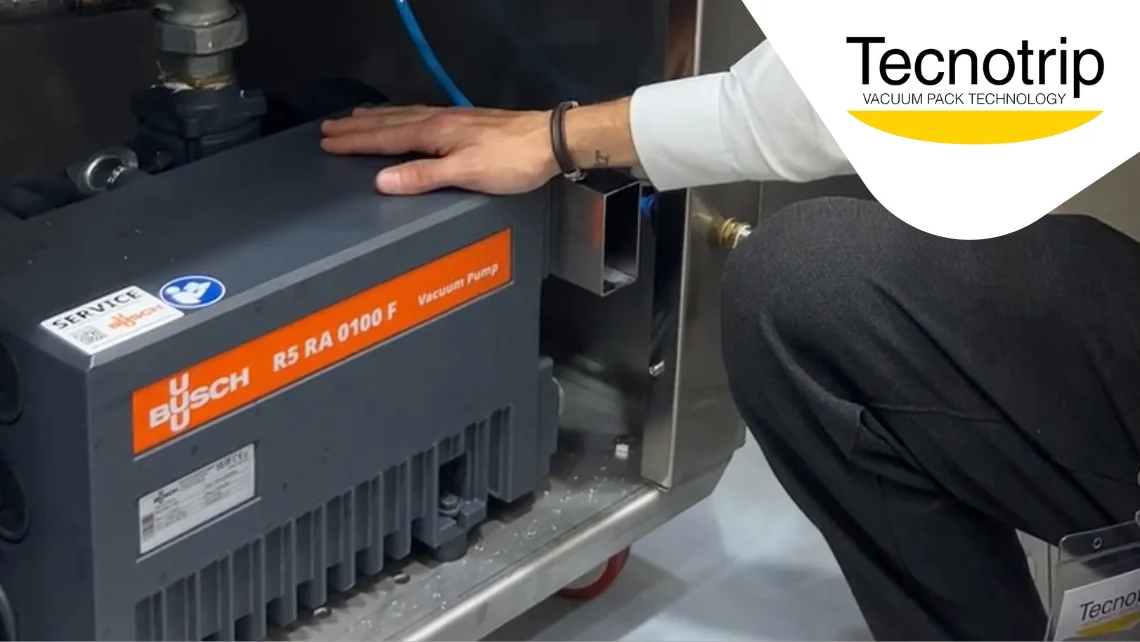
Discover how to carry out preventive maintenance on your vacuum packaging machine and prevent breakdowns. Learn when to check the Teflon tape, change the pump oil, inspect the seals and clean the chamber. Includes a practical checklist and advice from Tecnotrip’s technical service team.
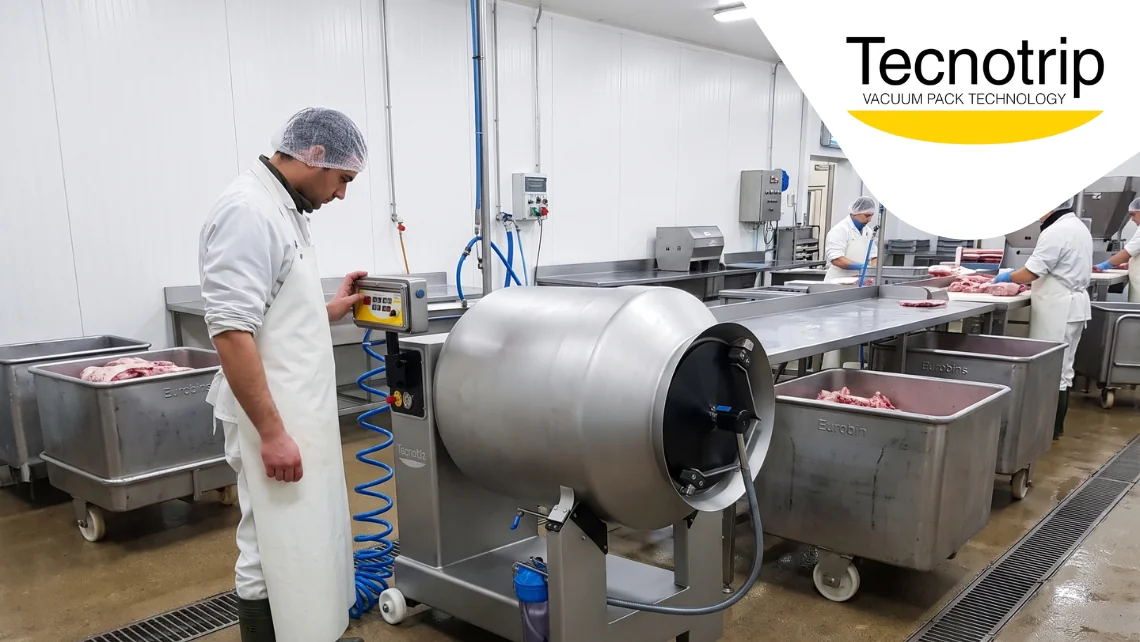
What is the difference between salt curing, tumbling and mixing? Discover how Tecnotrip's SAP vacuum tumblers and Vakona mixers work, their applications in the food industry, and how to choose the right machine for each process.
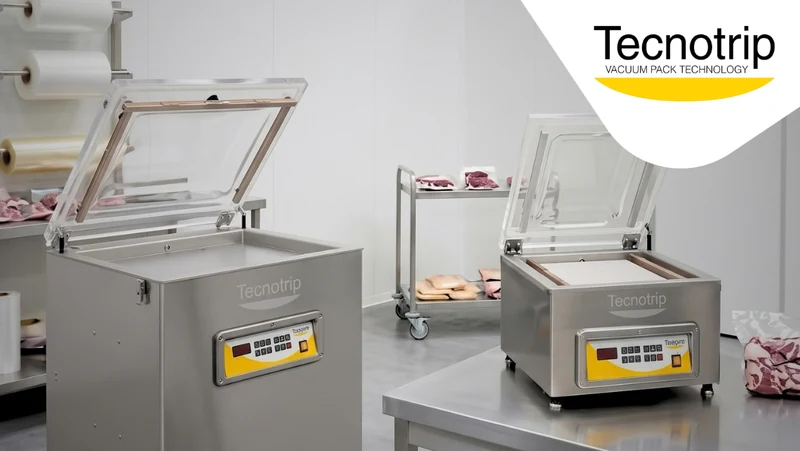
When a workshop or food business considers vacuum packing, the same doubt almost always comes up: chamber or tabletop? tabletop or floor-standing? And behind that doubt there's usually a misunderstanding that costs money.
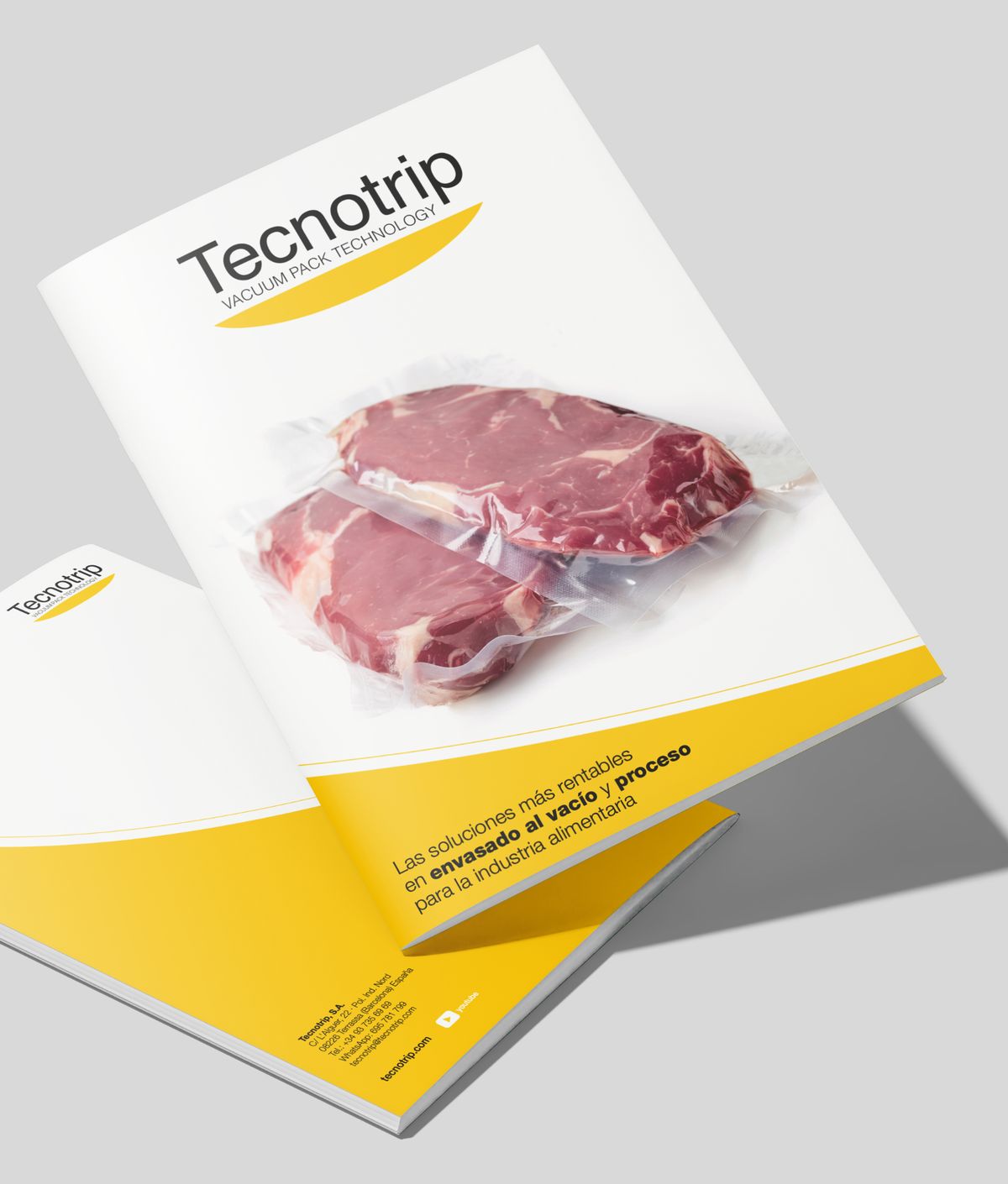
In the meat industry, every gram counts and every extra day of shelf life turns into margin. And yet, many processing workshops, cutting rooms and butcher's shops keep losing product to poor preservation: meat that oxidises too soon, weight loss through dehydration, and returns that nobody tracks but that quietly eat into the profit.

Discover which packaging technology to apply to 4th and 5th Range —MAP, vacuum, Skin and processing— to extend shelf life, eliminate waste and optimize your line.

Discover the preventive maintenance plan for your vacuum packaging machine: prevent breakdowns, reduce costs and extend machinery life with Tecnotrip's technical service.


