

4TH AND 5TH RANGE: Packaging & performance. DISCOVER IT!
The acceleration of the 4th and 5th Range sector this September
The start of the new season in September marks a key revival in the catering, HORECA, and commercial distribution sectors. Demand for 4th Range foods (fresh, washed, and cut fruits and vegetables) and 5th Range foods (cooked meals, stews, and ready-to-regenerate bases) continues to grow at a steady pace.
In this market, consumers and professionals alike demand maximum freshness, texture, and flavor, but with one non-negotiable premise: extending shelf life without adding artificial preservatives.
Integrating cutting-edge technology such as tray sealers for 4th and 5th Range allows producers to protect food safety, eliminate waste, and deliver flawless presentation on store shelves or in commercial kitchens.
In this article, we analyze the technical keys to optimizing the preparation, preservation, and packaging of these high-value products.
Key challenges in preserving prepared and fresh products
Unlike cured or dry products, 4th and 5th Range foods present specific microbiological and physical challenges during processing, storage, and transport.
Critical factors on the production and packaging line:
- Portioning and uneven marination: cutting products cleanly and achieving homogeneous marination in 5th Range stews or meats is essential prior to sealing.
- Oxidation and enzymatic browning: cut 4th Range vegetables react quickly to oxygen, losing their bright color and crisp texture.
- Presence of liquids and sauces: 5th Range meals require high-security sealing that maintains airtightness even when in contact with fats, broths, or steam.
- Crushing of delicate products: direct vacuum extraction on leafy greens or soft fruits can damage the product structure if the proper technology is not used.
Preparation and packaging technology: processing, MAP, vacuum, and Skin
The choice of processing and packaging system depends directly on the nature of the recipe and the target shelf life:
- TD Cutters for precision portioning: essential for fast, clean, and uniform slicing of fresh or cooked 5th Range ingredients before packaging, preventing fiber tearing and ensuring exact portion weight.
- Refrigerated tumblers for vacuum tumbling and marinating: ideal for 5th Range recipes. Processing in a refrigerated vacuum tumbler accelerates the absorption of marinades, sauces, and brines evenly throughout meats and stews, tenderizing texture and retaining original juiciness.
- Modified Atmosphere Packaging (MAP / Gas) for 4th Range: the ideal solution for salads, chopped vegetables, fruits, and fresh mixes. Air is extracted and a protective gas mixture is injected, reducing plant metabolism, maintaining freshness, and preventing product crushing.
- Direct vacuum packaging for 5th Range and Sous-Vide: for stews, sauces, soups, and portions intended for low-temperature cooking (sous-vide), chamber vacuum packaging machines for liquids and stews offer maximum precision vacuum control, preventing product boiling and ensuring an airtight seal.
- Tray sealing and Skin effect: ideal for single-serve high-end 5th Range portions (fish with sauce, cooked meats, gourmet launches). The film contours precisely to the plate, locking ingredients in place during transport and boosting visual appeal.
Technical demo: Packaging and tray sealing of prepared meals
Watch this video to see how Tecnotrip tray sealing technology achieves fast, airtight seals on trays for the 5th Range industry:
Food safety regulations in prepared foods
The production and distribution of prepared meals and fresh vegetables are subject to strict cold chain and packaging controls. You can consult official standards and recommendations in the EFSA Guide on Prepared Food Safety.
Conclusion: optimize your 4th and 5th Range line this September
Boosting your line of prepared meals or fresh vegetables requires processing and packaging technology that guarantees maximum food safety, organoleptic preservation, and an attractive display on retail shelves. At Tecnotrip, we design and manufacture slicing, marinating, tray sealing, and vacuum equipment tailored to the real needs of 4th and 5th Range food producers.
👉 Looking to improve the performance and shelf life of your products?
Contact our technical team for personalized advice or to schedule packaging tests:
✉ tecnotrip@tecnotrip.com
☎ +34 93 735 69 69
📲 WhatsApp: +34 695 78 17 99
Key takeaways
- 4th range products (fresh, washed and cut vegetables and fruit) and 5th range products (cooked dishes ready to regenerate) need a longer shelf life without artificial preservatives.
- The main packaging challenges are oxidation of cut vegetables, seal integrity with liquids and sauces, and crushing of delicate products.
- Modified atmosphere packaging (MAP) is the ideal solution for salads, chopped vegetables and fruit: it slows down the product’s metabolism and prevents crushing.
- For stews, sauces, creams and sous-vide portions, chamber vacuum packaging with precise vacuum control is recommended, as it prevents the product from boiling.
- Tray sealing with Skin effect holds the ingredients of premium 5th range portions in place during distribution and improves presentation.
Frequently asked questions
What is the difference between 4th range and 5th range food?
4th range food is fresh, washed and cut vegetables and fruit. 5th range food is cooked dishes, stews and bases ready to regenerate.
Which packaging system is best for salads and cut vegetables?
Modified atmosphere packaging (MAP): the air is removed and a protective gas mixture is injected, which slows down the product’s metabolism, keeps it fresh and prevents crushing.
How are 5th range dishes with sauces or for sous-vide cooking packaged?
With chamber vacuum packaging machines for liquids and stews, which offer highly precise vacuum control to prevent the product from boiling and ensure an airtight seal. For premium individual portions, Skin tray sealing holds the ingredients in place.
Fecha: 07/09/2026
Explore more articles on our blog
Discover more from the TECNOTRIP Blog and keep up with our latest news and technical insights.
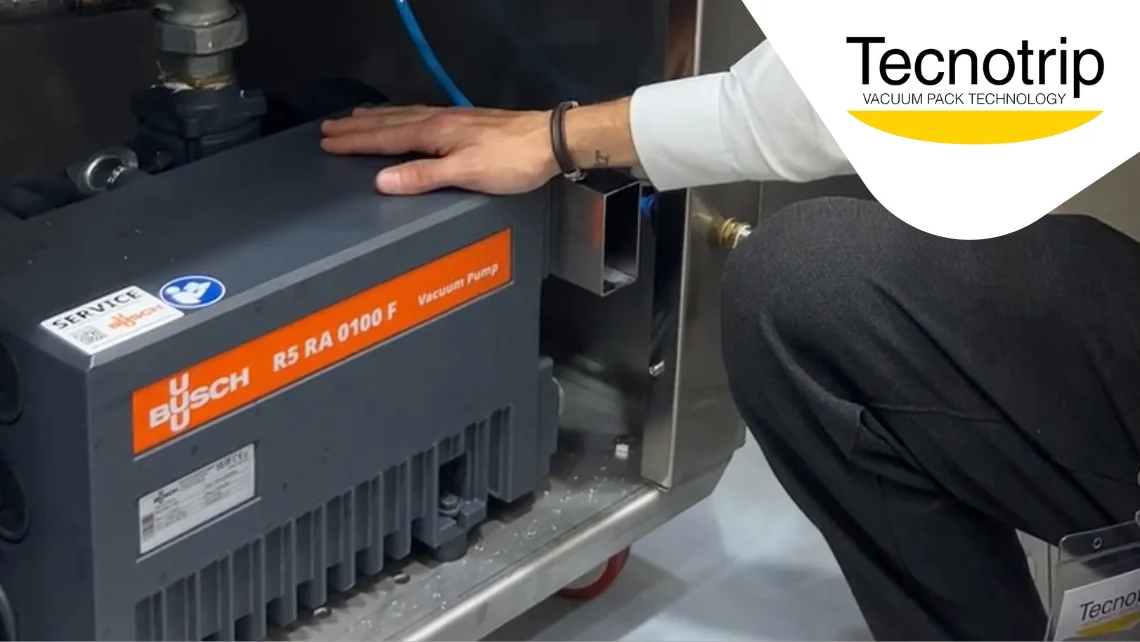
Discover how to carry out preventive maintenance on your vacuum packaging machine and prevent breakdowns. Learn when to check the Teflon tape, change the pump oil, inspect the seals and clean the chamber. Includes a practical checklist and advice from Tecnotrip’s technical service team.
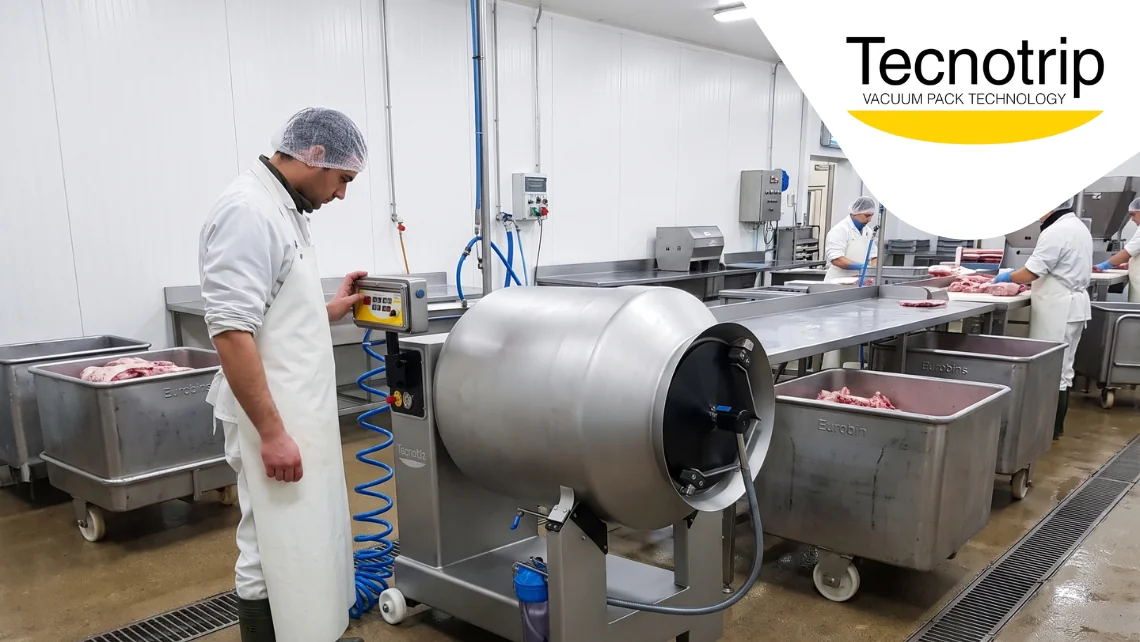
What is the difference between salt curing, tumbling and mixing? Discover how Tecnotrip's SAP vacuum tumblers and Vakona mixers work, their applications in the food industry, and how to choose the right machine for each process.
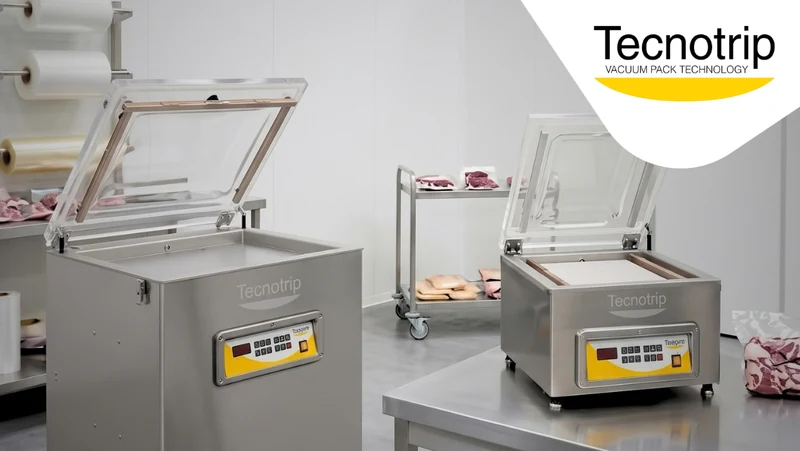
When a workshop or food business considers vacuum packing, the same doubt almost always comes up: chamber or tabletop? tabletop or floor-standing? And behind that doubt there's usually a misunderstanding that costs money.
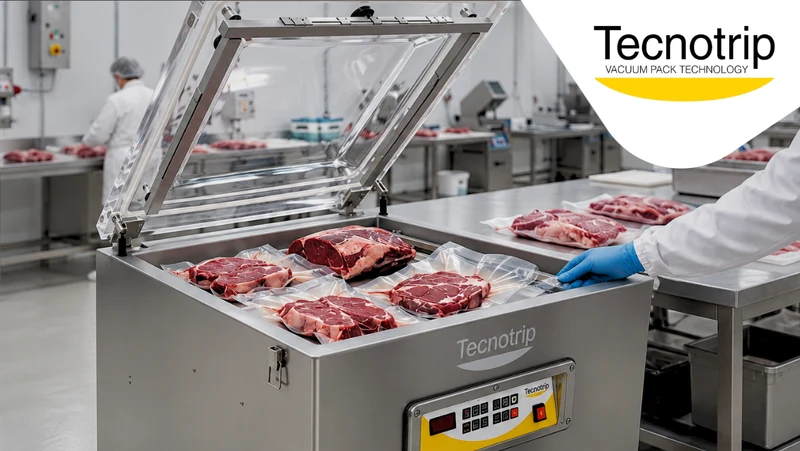
In the meat industry, every gram counts and every extra day of shelf life turns into margin. And yet, many processing workshops, cutting rooms and butcher's shops keep losing product to poor preservation: meat that oxidises too soon, weight loss through dehydration, and returns that nobody tracks but that quietly eat into the profit.

Discover the preventive maintenance plan for your vacuum packaging machine: prevent breakdowns, reduce costs and extend machinery life with Tecnotrip's technical service.

Discover how vacuum, MAP and Skin packaging improve the preservation of fresh and cured meat, reduce waste, and optimize your meat facility's efficiency.


