
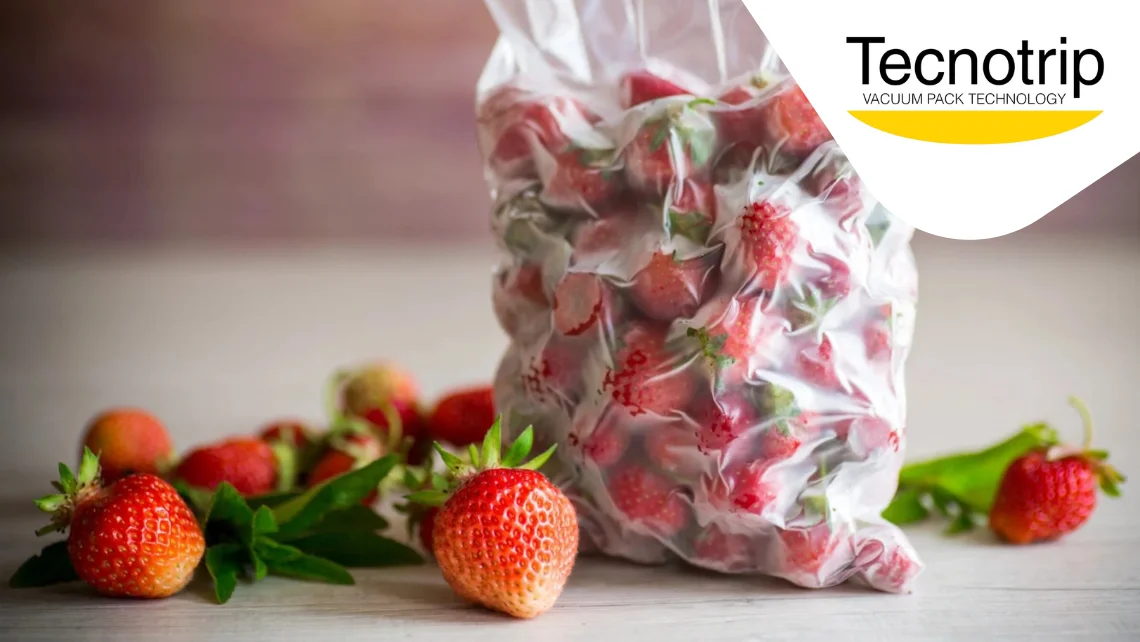
The horticultural sector as a pillar of modern food systems
The horticultural sector holds a central position within the food supply chain. Fruits and vegetables not only represent a fundamental part of the diet, but are also directly linked to consumption trends based on health, sustainability, and product quality.
Its relevance goes beyond domestic consumption. In Spain, the horticultural sector has a strong export presence, which implies increasingly demanding management in terms of logistics, preservation, and regulatory compliance. Ensuring that products maintain their freshness from origin to point of sale has become a key factor for the competitiveness of the sector.
Current trends in the horticultural sector 🌱
The horticultural sector is undergoing a transformation process driven by several factors. On the one hand, there is growing pressure to reduce food waste and optimize the use of resources. On the other hand, markets demand products with a longer shelf life, carefully maintained visual appearance, and food safety guarantees.
Added to this is the evolution of commercialization channels. Large-scale retail, long-distance exports, and the rise of fresh ready-to-eat products are forcing a rethink of traditional preservation systems. Consumers are also becoming increasingly demanding and penalize any sign of product deterioration.
The sector’s main challenge: post-harvest preservation
Once harvested, fruits and vegetables remain living products. They continue to respire, consume oxygen, and generate CO₂, which leads to progressive changes in their structure, texture, and flavor.
If these processes are not properly controlled, problems such as loss of firmness, color changes, or a drastic reduction in shelf life may occur. These losses directly affect the profitability of producers and distributors, while also generating waste at the point of sale.
For this reason, post-harvest preservation has become one of the main challenges of the modern horticultural sector.
From traditional methods to more advanced preservation solutions
For years, fruit and vegetable preservation has been mainly based on controlling temperature and humidity. Although these measures remain essential, in many cases they are no longer sufficient to meet current market demands.
The need to extend the commercial life of products without altering their natural characteristics has driven the adoption of more technical solutions capable of acting on the food’s environment and slowing down degradation processes.
It is at this point that packaging technologies begin to play an increasingly relevant role within preservation strategies.
Is vacuum packaging compatible with fruits and vegetables?
For many years, vacuum packaging has been mainly associated with meat, fish, or processed products. However, its application in the horticultural sector has evolved thanks to greater knowledge of the physiological behavior of plant-based products.
Currently, vacuum is not applied generically, but rather as part of more precise systems that allow oxygen reduction without compromising the natural respiration of the product in fruits and vegetables where its application is technically viable. When properly applied, it helps slow oxidation and improves product stability during transport and storage.
Packaging technologies applied to the horticultural sector
Partial and controlled vacuum packaging
In fruits and vegetables, total vacuum is not always the most suitable option, especially for products with high respiration rates. Therefore, partial vacuum systems are used, allowing the level of air extraction to be adjusted according to the type of product and its stage of ripeness.
This approach helps better preserve the structure of the food, prevents physiological damage, and allows its organoleptic properties to be maintained for longer.
Combined systems and adapted materials
In many cases, vacuum packaging is combined with other technologies, such as modified atmosphere packaging or the use of films with controlled permeability. These solutions make it possible to adapt the packaging environment to the specific needs of each product, balancing preservation and quality.
Proper selection of packaging materials is key to managing humidity, gas exchange, and package resistance during distribution.
Impact on loss reduction and sector efficiency
The application of more advanced preservation solutions helps reduce losses throughout the entire value chain. Greater product stability facilitates logistics planning, improves consistency at the point of sale, and reduces commercial incidents.
All of this contributes to greater operational efficiency and enhanced competitiveness of the horticultural sector in an increasingly globalized environment.
CONCLUSION
Preservation and technology as allies of the horticultural sector
The horticultural sector faces growing challenges in terms of preservation, quality, and sustainability. Understanding product behavior and applying appropriate technical solutions is essential to ensure long-term viability.
Vacuum packaging, when applied using technical criteria, positions itself as another tool within a global preservation strategy aimed at reducing waste and offering fresh and safe products to the final consumer.
If you would like to learn more about preservation solutions applied to the horticultural sector or find out which technologies are best suited to each type of product, you can contact our team through the form to receive further information.
tecnotrip@tecnotrip.com
+34 937356969
Fecha: 19/02/2026
Categorías: News
Explore more articles on our blog
Discover more from the TECNOTRIP Blog and keep up with our latest news and technical insights.
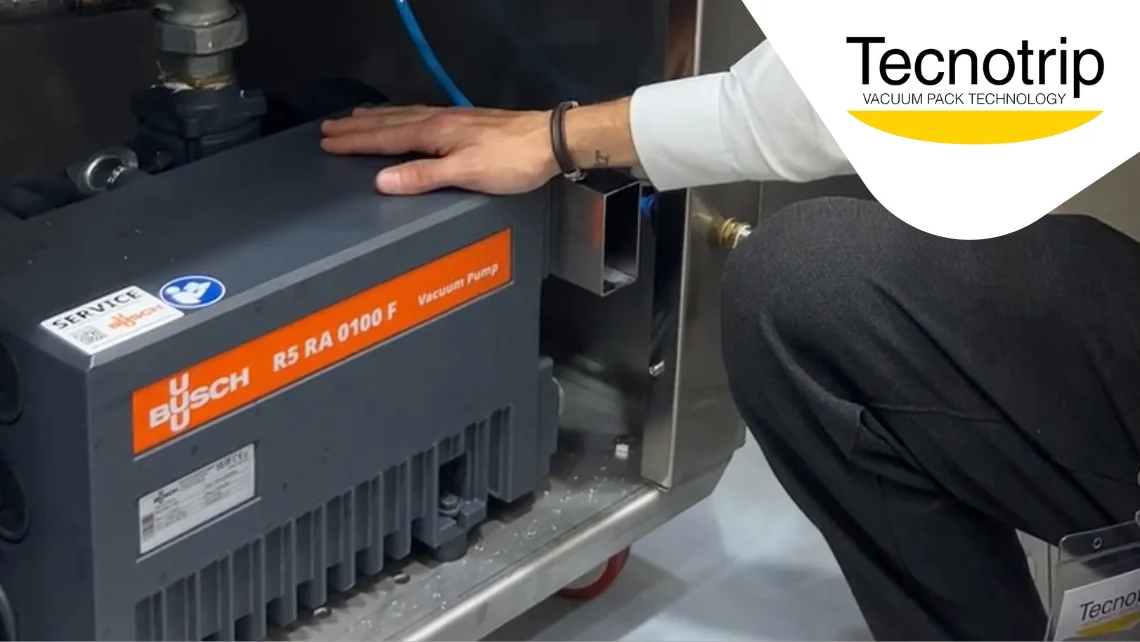
Discover how to carry out preventive maintenance on your vacuum packaging machine and prevent breakdowns. Learn when to check the Teflon tape, change the pump oil, inspect the seals and clean the chamber. Includes a practical checklist and advice from Tecnotrip’s technical service team.
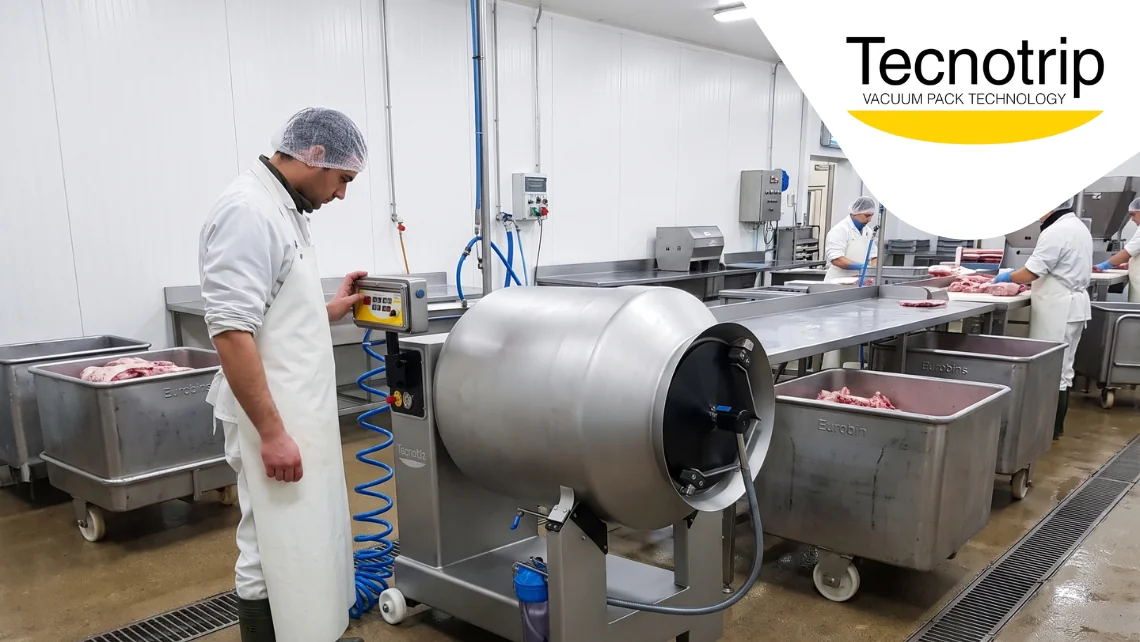
What is the difference between salt curing, tumbling and mixing? Discover how Tecnotrip's SAP vacuum tumblers and Vakona mixers work, their applications in the food industry, and how to choose the right machine for each process.
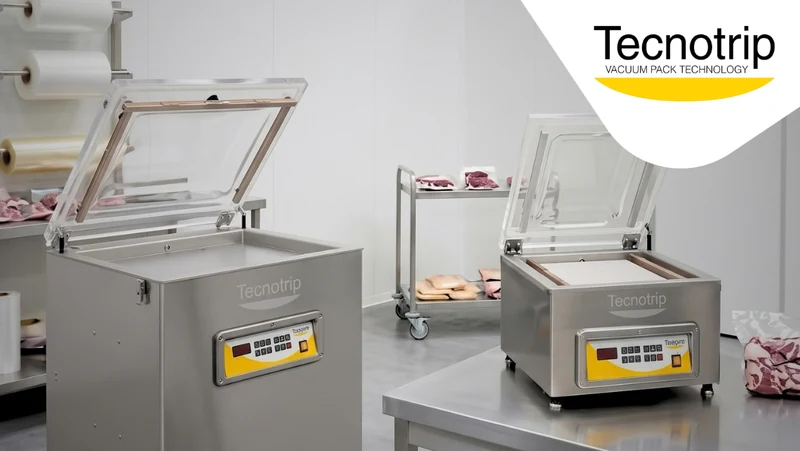
When a workshop or food business considers vacuum packing, the same doubt almost always comes up: chamber or tabletop? tabletop or floor-standing? And behind that doubt there's usually a misunderstanding that costs money.
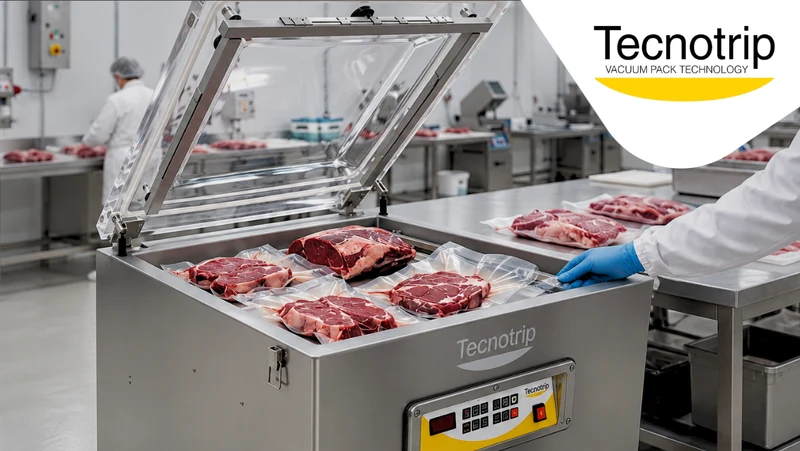
In the meat industry, every gram counts and every extra day of shelf life turns into margin. And yet, many processing workshops, cutting rooms and butcher's shops keep losing product to poor preservation: meat that oxidises too soon, weight loss through dehydration, and returns that nobody tracks but that quietly eat into the profit.

Discover which packaging technology to apply to 4th and 5th Range —MAP, vacuum, Skin and processing— to extend shelf life, eliminate waste and optimize your line.

Discover the preventive maintenance plan for your vacuum packaging machine: prevent breakdowns, reduce costs and extend machinery life with Tecnotrip's technical service.


