

How to improve operational efficiency and presentation in medium-scale productions
Optimization starts where the process ends: packaging
In the food industry, optimizing processes no longer means simply increasing production. It means reducing waste, improving workflow stability, and ensuring consistent results in every batch.
In bakeries, packaging centers, specialized factories, or catering businesses, packaging is not a secondary stage. It is the point where preservation, presentation, logistics, and quality perception come together. When the system is not aligned with production reality, downtime, unnecessary handling, or lack of standardization begin to appear. For this reason, choosing the right technology becomes a strategic decision.
An efficient packaging system not only protects the product but also helps structure the workflow more effectively, reduce incidents, and maintain consistent quality over time.
Medium-scale production: balancing flexibility and stability
Medium-scale productions require versatile solutions. They do not operate with fully automated lines, but they also cannot rely on unstable manual processes. Their challenge is to maintain a consistent pace, adapt to different formats, and offer an attractive presentation on the shelf.
Optimizing in this context does not mean oversizing the investment, but rather incorporating systems that reduce manual intervention, standardize cycles, and improve the overall efficiency of the process. At this point, choosing the right technology directly influences internal organization and the ability to respond to changes in demand.
SKIN packaging as a tool for operational improvement
SKIN packaging allows the film to adapt to the contour of the product like a second skin, creating a stable three-dimensional presentation. Beyond the visual impact, this system helps reduce internal product movement, improve stability during transport, optimize storage, and extend the shelf life of fresh products.
This combination of presentation and functionality allows safer handling and distribution, especially for high-value or delicate products.
The result is packaging that not only protects the product but also adds value at the point of sale and improves the perception of quality.
TSB-A-100-SK: efficiency without oversizing
The semi-automatic tray sealer TSB-A-100-SK is designed for preformed trays and medium-scale productions that seek a balance between performance and flexibility. It allows operation with different packaging programs — sealing, vacuum, vacuum + gas, vacuum + SKIN, or gas — making it easier to adapt to different product types without the need for multiple systems.
Its design includes automatic drawer entry through a double press and automatic exit at the end of the cycle, helping maintain a consistent workflow. In addition, it features an automatic system for collecting excess film, tool-free mold changes, and a digital programmer with 10 selectable programs and sensor-controlled vacuum.
With cycles of 3–4 per minute, it offers operational stability suitable for medium-scale productions that require consistency without the complexity of a large industrial line. This stability allows better planning of batch production and reduces deviations between cycles.
Optimizing means simplifying
In many cases, improving a process does not mean producing faster, but working with greater stability and fewer interruptions. Optimizing means reducing unnecessary handling, standardizing results, and maintaining a coherent workflow.
A well-sized semi-automatic solution makes it possible to improve product presentation, increase shelf life, and optimize material consumption without losing production flexibility. In medium-scale productions, this balance is key to maintaining efficiency without oversizing the investment.
Conclusion
Process optimization in medium-scale production does not depend solely on increasing capacity, but on integrating solutions that provide a balance between performance, flexibility, and added value. SKIN packaging, when applied with the appropriate technical criteria, improves operational efficiency and product presentation without adding unnecessary complexity.
For more information about the TSB-A-100-SK and how to optimize your packaging process, contact our team.
✉ tecnotrip@tecnotrip.com
☎️ +34 93 735 69 69
📲 WhatsApp: +34 695 78 17 99
Fecha: 06/03/2026
Categorías: News
Explore more articles on our blog
Discover more from the TECNOTRIP Blog and keep up with our latest news and technical insights.
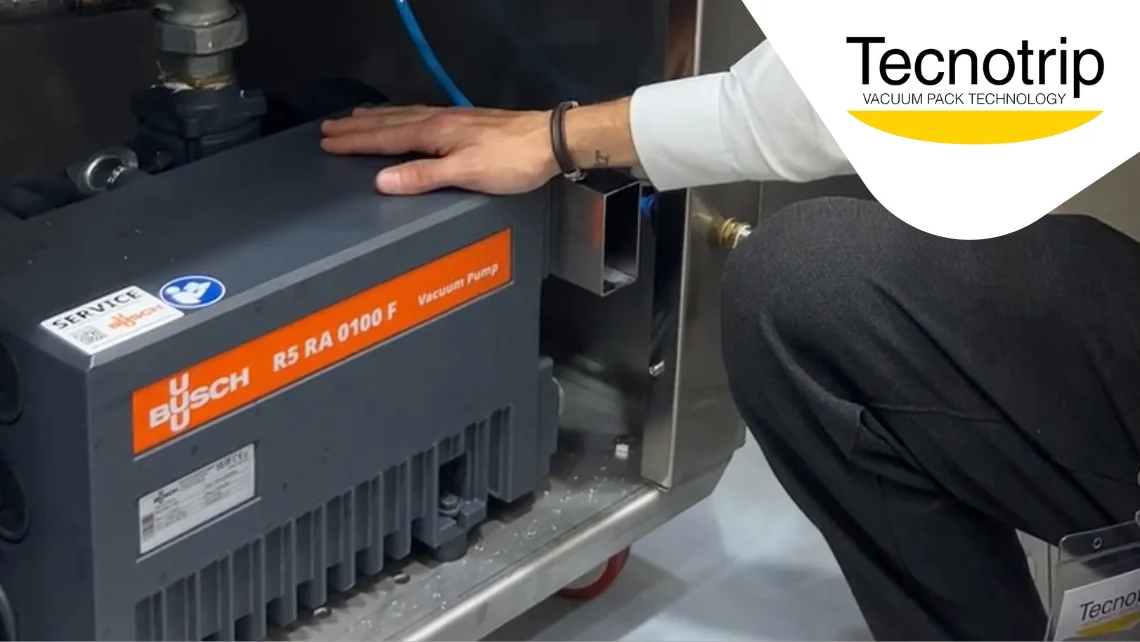
Discover how to carry out preventive maintenance on your vacuum packaging machine and prevent breakdowns. Learn when to check the Teflon tape, change the pump oil, inspect the seals and clean the chamber. Includes a practical checklist and advice from Tecnotrip’s technical service team.
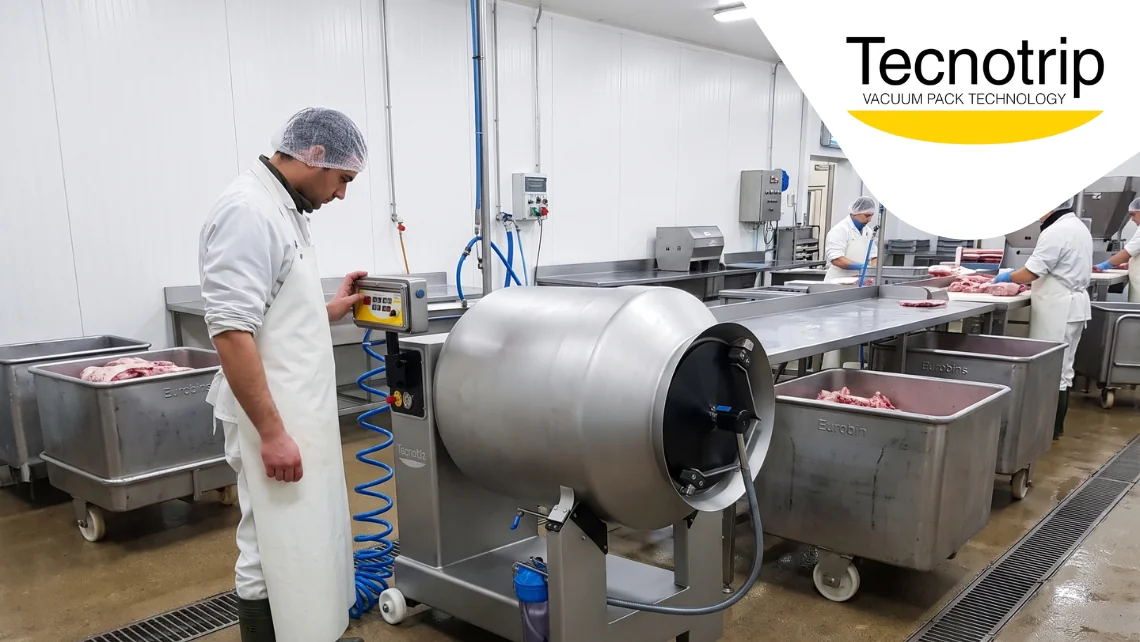
What is the difference between salt curing, tumbling and mixing? Discover how Tecnotrip's SAP vacuum tumblers and Vakona mixers work, their applications in the food industry, and how to choose the right machine for each process.
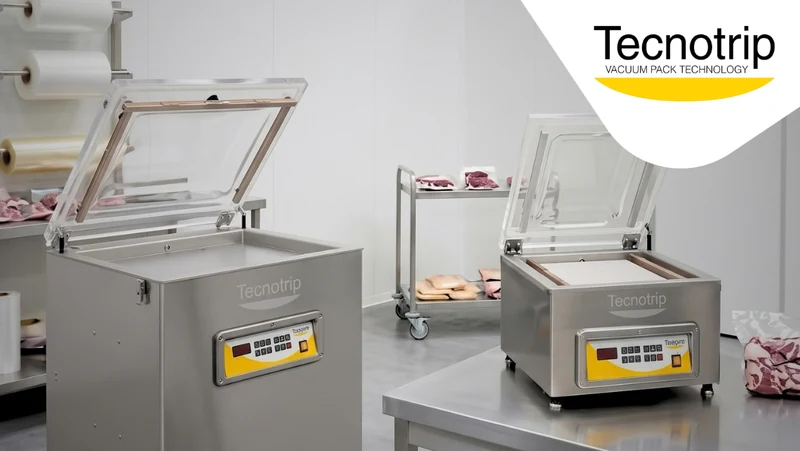
When a workshop or food business considers vacuum packing, the same doubt almost always comes up: chamber or tabletop? tabletop or floor-standing? And behind that doubt there's usually a misunderstanding that costs money.
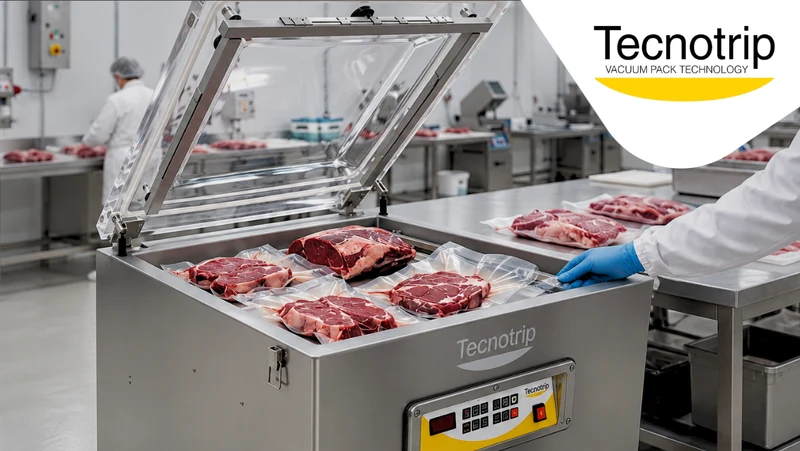
In the meat industry, every gram counts and every extra day of shelf life turns into margin. And yet, many processing workshops, cutting rooms and butcher's shops keep losing product to poor preservation: meat that oxidises too soon, weight loss through dehydration, and returns that nobody tracks but that quietly eat into the profit.

Discover which packaging technology to apply to 4th and 5th Range —MAP, vacuum, Skin and processing— to extend shelf life, eliminate waste and optimize your line.

Discover the preventive maintenance plan for your vacuum packaging machine: prevent breakdowns, reduce costs and extend machinery life with Tecnotrip's technical service.


