

TECHNICAL MAINTENANCE: Prevent breakdowns 🛠️ ACT NOW!
The importance of preventive maintenance in the food industry
Following the reactivation of production in September, food packaging and processing lines return to operating at full capacity. In this high-demand context, ensuring constant equipment availability and avoiding unscheduled downtime is a critical factor in protecting business margins.
Entrusting your equipment care to the official Tecnotrip technical service not only secures operational continuity, but also maximizes machinery service life and keeps strict hygiene and sealing standards fully intact.
In this article, we review the fundamental pillars of industrial maintenance and how a proper preventive plan drastically reduces operating costs.
Why corrective maintenance is always more expensive
Waiting for a vacuum packaging machine or tray sealer to fail before taking action generates a direct economic impact far higher than the cost of any scheduled inspection.
Direct consequences of a lack of maintenance:
- Unscheduled downtime during peak production: loss of staff working hours and delays in delivery commitments.
- Chain-reaction damage to key components: degraded oil in the vacuum pump or worn Teflon eventually damages the motor, sealing bars, or transformer.
- Loss of airtightness and product waste: deficient vacuum levels or irregular sealing compromise food preservation, resulting in product returns.
4-step maintenance plan for your packaging machine
To ensure your equipment always operates within optimal parameters, our technical team recommends executing a periodic inspection plan centered on four strategic points:
- Vacuum pump oil control and change. Synthetic oil lubricates and seals the Busch pump pistons. Replacing it according to specified operating hours prevents moisture buildup and exponentially extends motor life.
- Inspection of sealing system and Teflon tape. Replacing Teflon tape, silicone strips, and heating elements using original spare parts and official Tecnotrip consumables guarantees clean, airtight seals in every cycle.
- Verification of lid gaskets and seal integrity. The silicone gaskets on the chamber lid must be kept clean and flexible. A cracked or contaminated gasket prevents the machine from reaching the target vacuum percentage.
- Sensor calibration and digital programmer check. Verifying the accuracy of vacuum sensors and gas injection (MAP) ensures that every batch complies with the atmospheric parameters set by your quality assurance department.
Technical regulations and industrial safety standards
Maintenance of food packaging machinery must comply with European hygiene and machinery safety requirements. You can consult official standards on hygienic design in the ISO Standard on food machinery safety (ISO 14159).
Conclusion: maximum performance and service life for your investment
A structured preventive maintenance plan is the best guarantee to protect your investment, ensure packaging quality, and maintain your production line at peak performance all year round. At Tecnotrip, we have an in-house technical department, specialized technicians, and an extensive stock of original spare parts to respond with maximum speed.
👉 Need to inspect your machinery or request technical assistance?
Contact our technical support department to schedule an inspection for your equipment:
✉ tecnotrip@tecnotrip.com
☎ +34 93 735 69 69
📲 WhatsApp: +34 695 78 17 99
Key takeaways
- Preventive maintenance avoids unplanned downtime, extends the service life of packaging machines and maintains hygiene and sealing standards.
- Waiting for a machine to fail costs more: production hours are lost, components are damaged in a chain reaction (motor, sealing bars, transformer) and product losses appear due to poor vacuum or sealing.
- The plan recommended by Tecnotrip focuses on 4 points: vacuum pump oil, sealing system and Teflon, lid gaskets, and calibration of sensors and controller.
- Using original spare parts and consumables ensures clean, airtight seals in every cycle.
- Tecnotrip has its own technical service, specialised technicians and a stock of original spare parts.
Frequently asked questions
What does preventive maintenance of a vacuum packaging machine include?
Four key points: checking and changing the vacuum pump oil, inspecting the sealing system and Teflon, checking the lid gaskets, and calibrating the vacuum sensors, gas injection (MAP) and digital controller.
How often should the vacuum pump oil be changed?
According to the working hours specified for the machine. Changing it on time prevents moisture build-up and extends the life of the motor.
Why is corrective maintenance more expensive than preventive maintenance?
Because a breakdown during production causes unplanned downtime, delivery delays, chain damage to components such as the motor or sealing bars, and product losses due to loss of seal integrity.
Fecha: 07/09/2026

Explore more articles on our blog
Discover more from the TECNOTRIP Blog and keep up with our latest news and technical insights.
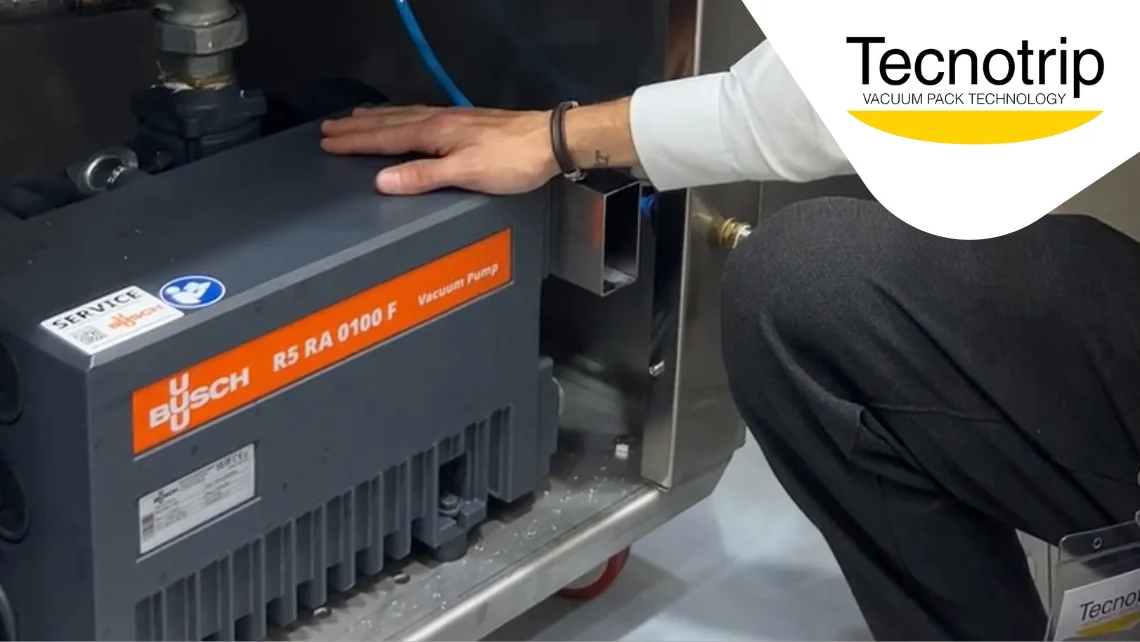
Discover how to carry out preventive maintenance on your vacuum packaging machine and prevent breakdowns. Learn when to check the Teflon tape, change the pump oil, inspect the seals and clean the chamber. Includes a practical checklist and advice from Tecnotrip’s technical service team.
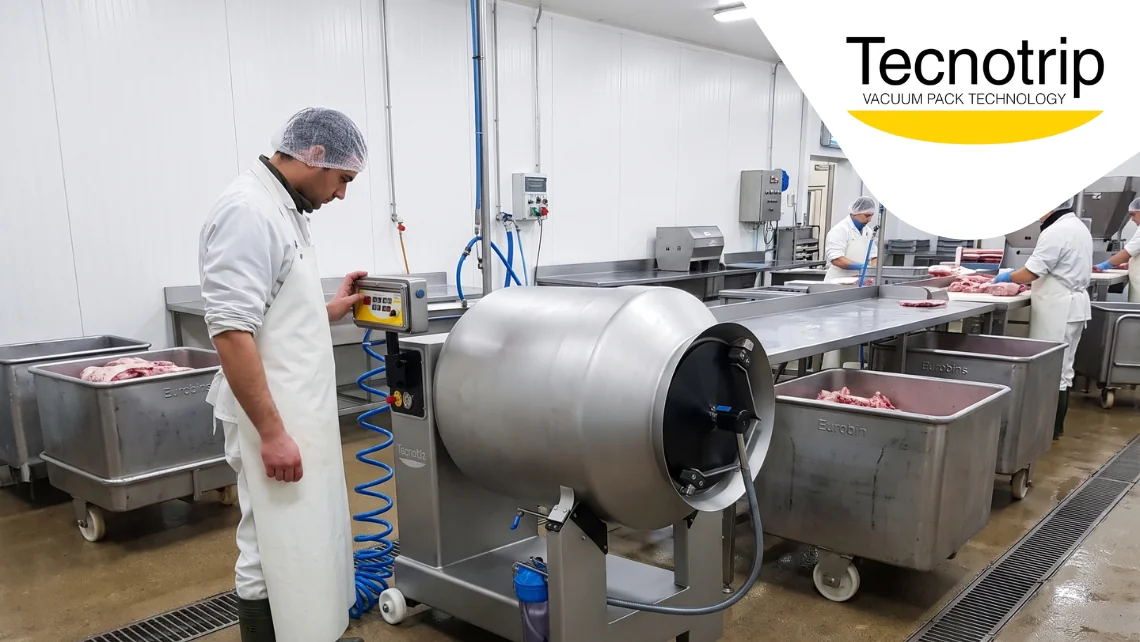
What is the difference between salt curing, tumbling and mixing? Discover how Tecnotrip's SAP vacuum tumblers and Vakona mixers work, their applications in the food industry, and how to choose the right machine for each process.
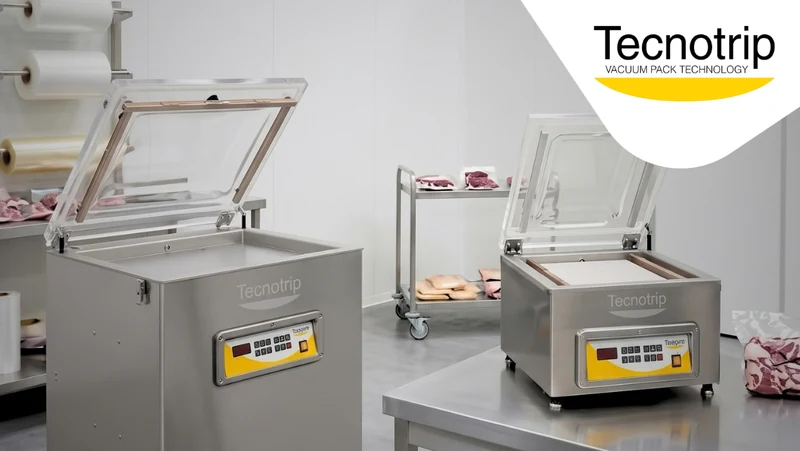
When a workshop or food business considers vacuum packing, the same doubt almost always comes up: chamber or tabletop? tabletop or floor-standing? And behind that doubt there's usually a misunderstanding that costs money.
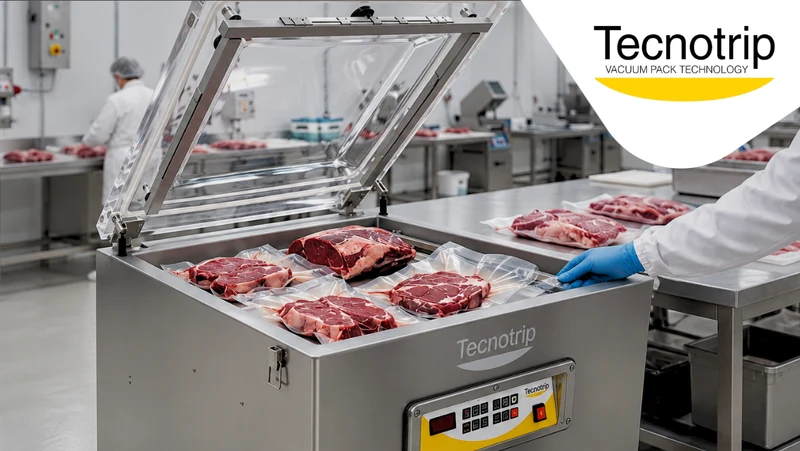
In the meat industry, every gram counts and every extra day of shelf life turns into margin. And yet, many processing workshops, cutting rooms and butcher's shops keep losing product to poor preservation: meat that oxidises too soon, weight loss through dehydration, and returns that nobody tracks but that quietly eat into the profit.

Discover which packaging technology to apply to 4th and 5th Range —MAP, vacuum, Skin and processing— to extend shelf life, eliminate waste and optimize your line.

Discover how vacuum, MAP and Skin packaging improve the preservation of fresh and cured meat, reduce waste, and optimize your meat facility's efficiency.


