

Complete guide on types, processes and applications
Complete guide on types, processes and applications
Vacuum packaging is one of the most relevant technologies for preserving food and sensitive products. In 2026, its importance is reinforced by increasing demand for fresh products, pressure to reduce food waste, and the evolution of sustainable materials. This guide aims to provide a technical and educational overview of the process, types of packaging, and most common applications, helping professionals in the food and industrial sector understand the fundamentals to maximize freshness and product safety.
What is vacuum packaging and how it works
Vacuum packaging involves removing the air from the package before sealing it hermetically. This process reduces oxygen, slows bacterial growth, and prevents oxidation. Industrial vacuum packaging includes three basic steps:
- Product and film selection: depending on product characteristics and desired shelf life
- Air extraction: using vacuum packaging machines or heat sealers
- Hermetic sealing: with multilayer films or materials with oxygen, moisture, and light barriers
This process not only extends product shelf life but also enables more efficient logistics and better perceived freshness for the consumer.
Types of vacuum packaging
Not all vacuum packages are the same. Knowing the different types is key to choosing the right solution based on product and objectives.
1. Chamber vacuum packaging
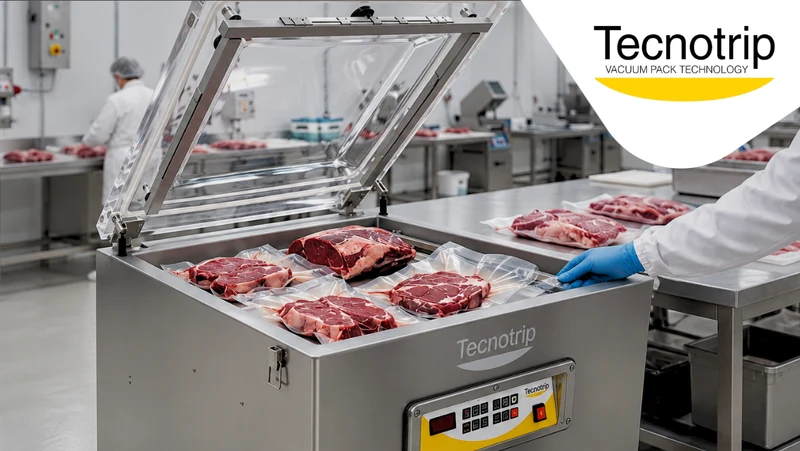
The product is placed inside a chamber, air is extracted, and the package is sealed. Common in industries handling meat, fish, or other products.
Key advantages:
- Uniform product protection
- Adaptable to different materials
- Efficient for small, medium, and large batches
2. Tray heat-sealed vacuum packaging
Products are placed in rigid or semi-rigid trays, air is removed, and the package is sealed with a top film. This is usually done with heat sealing machines, ensuring a uniform hermetic seal and maintaining product freshness. Used in small, medium, and large food companies.
Key features:
- Greater flexibility in tray size and shape
- Ideal for delicate products that cannot tolerate direct pressure
- Improves product presentation
- Facilitates stacking and transport without damage
3. Skin vacuum packaging
The Skin vacuum wraps the film tightly around the product, creating a “second skin” effect.
Technical benefits:
- Optimizes space in storage and transport
- Improves visibility and presentation
- Maintains freshness without extra material
4. Vacuum combined with MAP
Modified Atmosphere Packaging (MAP) combined with vacuum is ideal for highly sensitive products, as it controls the gas composition inside the package.
Advantages:
- Reduced oxidation
- Longer shelf life
- Improved microbiological safety
Materials and barriers in vacuum packaging
Package material is as important as the machine. Multilayer films and oxygen-barrier materials are key to preserving flavor, texture, and safety.
Material types:
- Multilayer with EVOH: excellent oxygen and moisture barrier
- Recyclable or compostable films: sustainability without compromising quality
- Transparent and durable films: allow product display without losing protection
The right choice depends on product type, shelf life, and distribution channel.
Industrial processes and technical considerations
Industrial vacuum packaging is not just air extraction; it includes parameter control, machine maintenance, and integration with production lines.
Critical factors:
- Product temperature and humidity before vacuum
- Machine type (chamber, external, continuous line)
- Seal type according to film and final use
- European regulations and food certifications
Applications of vacuum packaging
Vacuum packaging has broad applications in the food and industrial sector:
- Fresh and perishable products: meat, fish, cheese, fruits, vegetables
- Prepared foods: cooked, pre-cooked, or refrigerated meals
- Long-life products: coffee, nuts, snacks, or dehydrated ingredients
- Non-food: pharmaceuticals, electronic components, or moisture/oxygen-sensitive materials
This versatility makes vacuum packaging a cross-cutting and adaptable technology capable of addressing multiple industrial needs. Corporate video https://www.youtube.com/watch?v=2i_nKkwX5N8
Conclusion
At Tecnotrip, we are specialists in vacuum packaging solutions tailored to each product and industrial need. Our experience allows us to advise professionals and companies, helping them select the most suitable technology, materials, and processes. This knowledge is essential for any professional who wants to apply vacuum packaging with technical and strategic criteria, fully leveraging this technology to enhance product quality and company reputation in the food sector.
Contact
Get in touch with us via the contact form or through these channels:
- Email: tecnotrip@tecnotrip.com
- Phone: +34 93 735 69 69
- WhatsApp: +34 695 78 17 99
Fecha: 19/01/2026
Categorías: News
Explore more articles on our blog
Discover more from the TECNOTRIP Blog and keep up with our latest news and technical insights.
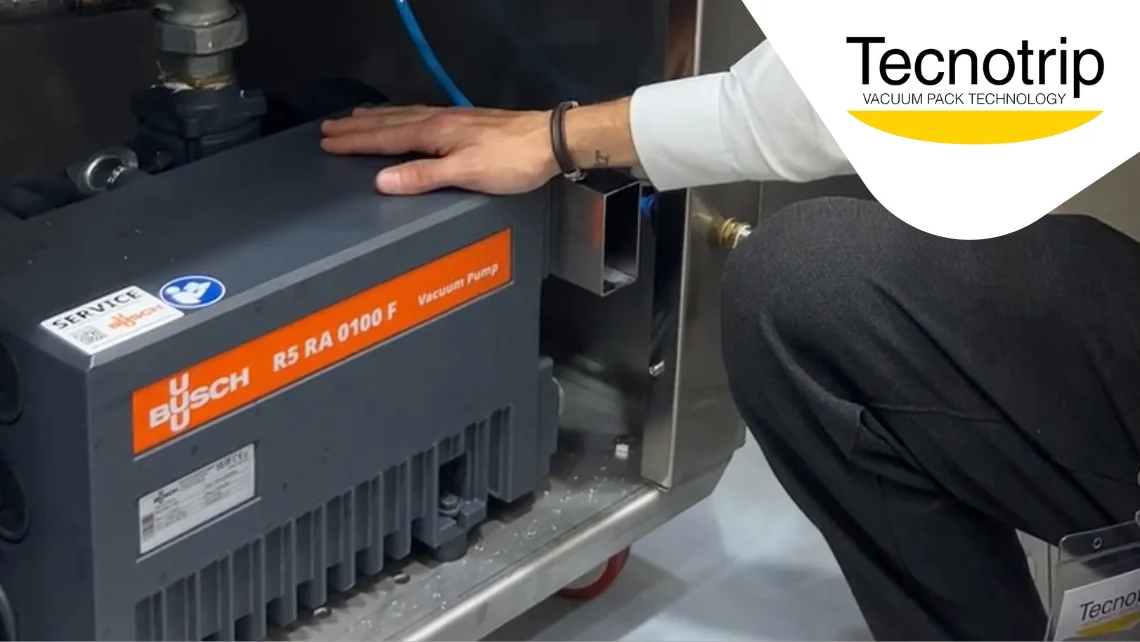
Discover how to carry out preventive maintenance on your vacuum packaging machine and prevent breakdowns. Learn when to check the Teflon tape, change the pump oil, inspect the seals and clean the chamber. Includes a practical checklist and advice from Tecnotrip’s technical service team.
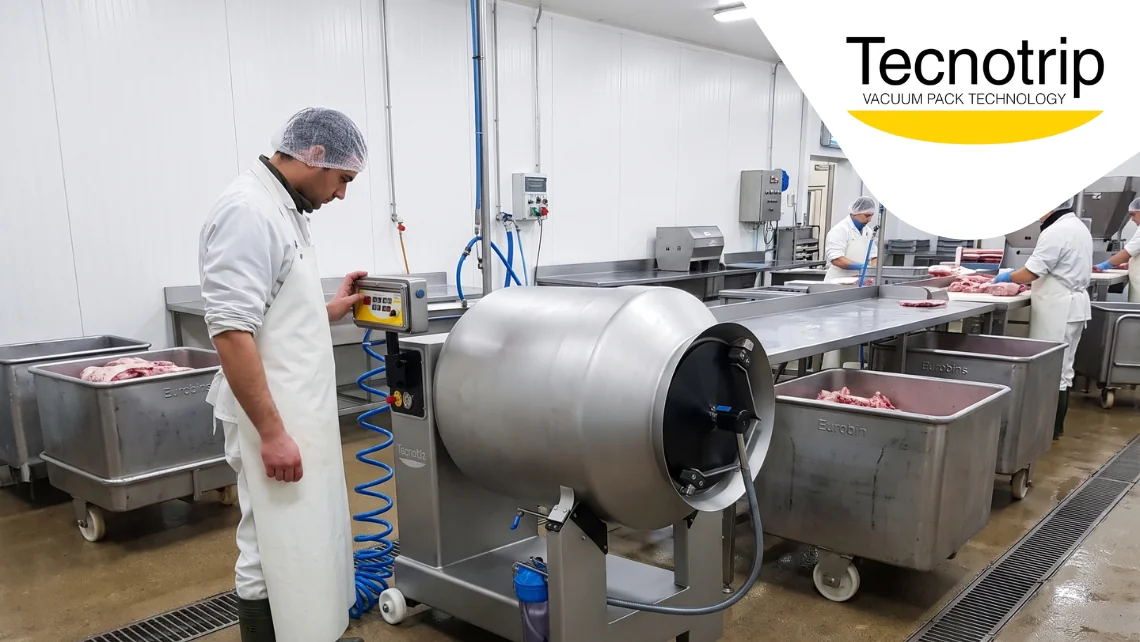
What is the difference between salt curing, tumbling and mixing? Discover how Tecnotrip's SAP vacuum tumblers and Vakona mixers work, their applications in the food industry, and how to choose the right machine for each process.
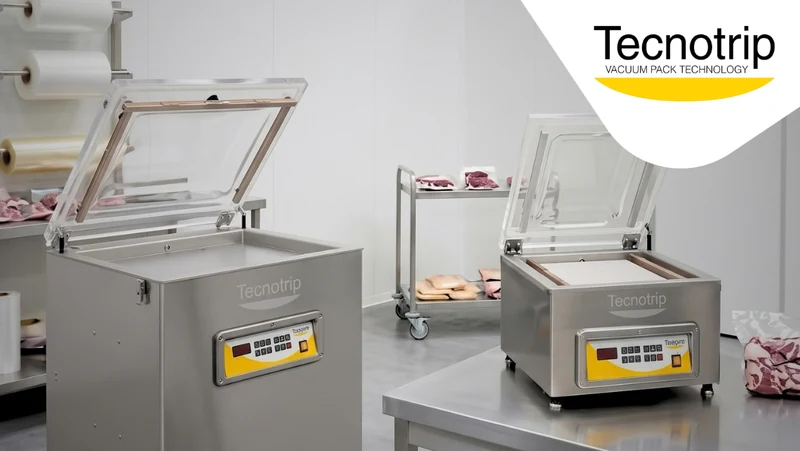
When a workshop or food business considers vacuum packing, the same doubt almost always comes up: chamber or tabletop? tabletop or floor-standing? And behind that doubt there's usually a misunderstanding that costs money.
In the meat industry, every gram counts and every extra day of shelf life turns into margin. And yet, many processing workshops, cutting rooms and butcher's shops keep losing product to poor preservation: meat that oxidises too soon, weight loss through dehydration, and returns that nobody tracks but that quietly eat into the profit.

Discover which packaging technology to apply to 4th and 5th Range —MAP, vacuum, Skin and processing— to extend shelf life, eliminate waste and optimize your line.

Discover the preventive maintenance plan for your vacuum packaging machine: prevent breakdowns, reduce costs and extend machinery life with Tecnotrip's technical service.


